
by ADA | Mar 22, 2026 | Views |
Countless millions are spent investigating cultural property trafficking to little effect
Preventing trafficking in cultural goods is a major preoccupation of the European Union.
It is one of the key objectives of the constantly updating anti-money laundering regulations; it is the main plank of the import licensing regulation introduced last year; and it led to the creation of Germany’s highly restrictive Cultural Property Protection Act in 2016.
Fears of cultural property trafficking, especially within Europe, have resulted in an ongoing series of co-ordinated law enforcement crackdowns across more than 80 countries since 2014, namely: Operations Odysseus (2014), Aureus (2015) Pandoras I, II, III, IV, V and more (2017-), Sardica (2018), and Achei (2019). These all come under the umbrella of the EMPACT initiative (European Multidisciplinary Platform Against Criminal Threats).
Four current projects running for several years and funded by Europe’s Horizon Project to the tune of €18 million follow on from countless others of the same ilk as they investigate the scourge of trafficking. They are Anchise (€4m), Aurora (€3.5m), Enigma (€4m), and Rithms (€5m) plus another €1.5m being assigned.
Their various remits include:
– Developing methods and digital tools for the protection, identification and traceability of cultural goods.
– Protection, tracing, restitution and safeguarding, as well as provenance research.
– The production of evidence-based research to support the deployment of preventative measures against looting and illicit trade of cultural goods.
– Raising awareness, mobilising and further strengthening cooperation among citizens, stakeholders, experts, policy makers and all actors involved.
Plenty of research but nothing to show for it
In Germany from 2015 to 2019, the €1.2m ILLICID Project analysed over 6,100 ancient objects as it attempted to identify the level and patterns of crime and how they might support money laundering and terrorism financing. At no point did its concluding report identify any trafficked goods or any terrorism financing, the prime goal of the whole project.
Now, a project headlined Culture, Creativity and Inclusive Society will enjoy another €5 million for ‘capacity building’, ‘evidence and intelligence gathering’, ‘cross domain co-operation’ and ‘consolidated tools and platforms’ – for which read more of the same.
So, with all this time and money spent on assessing the scope, methods and other characteristics of the trafficking of cultural goods in Europe and beyond, how big is the problem and what is this illicit trade worth?
The answer so far is that no one has a clue.
Organisations like UNESCO have tried to get round this in the past by quoting substantial figures (in UNESCO’s case $10 billion annually, first quoted in October 2020) that do not stand up to the slightest scrutiny, and which they have since stopped using, admitting that they had no basis in fact.
In March 2025, The European Commission published its final report under the title Study on measures to increase traceability of cultural goods in the fight against cultural goods trafficking at the Member State level and at the EU level.
It detailed the outcomes of Operations Odysseus, Aureus, Pandora and the rest (costs unknown but certainly in the tens of millions of euros based on minimal available data).
Arrest and seizures but no record of outcomes
Of the operations from 2015-2023, it reported: “These operations seized over 234,000 cultural objects (including small items such as coins), with at least 1,255 investigations initiated and 534 arrests made.”
However, despite these figures, no attempt has been made to measure the effectiveness of these operations. Europol, which helped co-ordinate the operations, has admitted to having no data on how many arrests have led to convictions, nor about how many seized items later had to be returned as licit.
The Commission report also reveals that in at least five of the operations, no data is available relating to the number of investigations launched as a result, and in at least three of them no record is available relating to the number of arrests.
The Commission’s publication of the report in March 2025 coincided with the Antiquities Forum’s launch of a survey of a dozen leading bodies concerned with the issue of cultural heritage crime across the world, from the European Commission itself to the FBI, UNESCO, Europol, Interpol and others. What independently verifiable data did any of them have to demonstrate the level and extent of trafficking, money laundering and terrorism financing using cultural property? Not all of them answered, but those that did provided no data at all.
After so many years of investigations and enforcement operations, what is the problem? Why are Europol and Interpol not tracking outcomes from their operations? With so little hard data to go on, one must ask what the point of these exercises are beyond propaganda and to justify the funding for law enforcement bodies.
Art market risk downgraded by the authorities
Art market representatives at the January 2026 meeting of experts with the European Commission to discuss progress with the import licensing regulation put the question again: what data does the European Union have to show the size and scope of trafficking, as well as the actual value of the illicit market in such objects? This is important bearing in mind the enormous level of resources – including public money – being spent on researching this issue. We await an answer.
After countless investigations, operations and reports over the past 15 years, none of the leading bodies among government, law enforcement and the NGOs can provide any idea whatsoever of the scale of the problem, nor any reliable data beyond the extremely occasional case, which almost never involves the art market. Even where it supposedly does – for example with The Louvre scandal – years after the arrests and claims are made, we still await any concrete result. So what does that tell us?
The European Union continues to fund multiple projects and initiatives to prevent the trafficking and looting of cultural property, primarily through Horizon Europe, the Internal Security Fund (ISF), and direct cooperation with UNESCO. While there is no single, isolated budget line for this, the EU Action Plan (2022–2025) provides a comprehensive framework, with millions allocated to specific research, technological, and law enforcement projects.
Among other recent and current initiatives in addition to those listed above are:
– Specific Horizon 2026 Call: A dedicated call in 2026 for ‘Preventing and fighting illicit trafficking of cultural goods’ – €5 million.
– ARTDETECT, which focuses on cutting-edge technologies like AI and blockchain to detect stolen items. Part of an EU-funded €7.5 million research project via the Horizon programme led by Global technology company Orfium called AIXpert, the ultimate objective is to improve transparency and accountability in artificial intelligence systems across sectors.
– PRISM (2025-2027), which aims to fight trafficking in museums. This is part of a multiple set of distinct EU-funded ‘PRISM’ initiatives, the most recent being a €7.6 million project (PEACEPLUS programme) for manufacturing innovation and another focusing on cultural heritage protection.
– The European Commission has co-delegated €2.8 million to UNESCO for a 36-month project (ending roughly 2025-2026) to fight illicit trafficking of cultural property in the Western Balkans.
In all, current projections account for a total of €22.9 million dedicated to future related initiatives. With the €18 million already accounted for, that’s a total of more than €40 million being funneled into multiple projects essentially doing the same thing. And yet, hard data showing the size, nature and scope of trafficking in cultural property, and its links to terrorism financing, remain all but non-existent.
What are these generous budgets really for?
Is it possible that the funds spent on research into cultural property looting and trafficking are actually greater than the value of the property looted and trafficked globally? Of course we cannot know because despite all the money spent, no one has any idea of what that figure is. What these budgets do ensure, however, is significant funding for academics, technocrats, civil servants and law enforcement as part of the incessant NGO/public policy forum gravy train, with the travelling circus of symposia and forums in plush hotels and conference centres around the globe. Enormous focus is put on process and projects, but precious little on effective outcomes and reliable intelligence. This extraordinarily lavish largesse seems unstoppable. Exactly who is holding those with the purse strings to account as the money disappears over the horizon?
by ADA | Mar 13, 2026 | Uncategorized, Views |
Academic archaeologists do not have a monopoly on ethics and rights when it comes to investigating the past, whatever they may think
Only academics, archaeologists, museums, NGOs and governments should be allowed to make money from ancient objects. Everyone else can – and should – fund their work, but must not be allowed to benefit in any way financially from the sector.
How does that sound?
Whatever your viewpoint, this is effectively what interested parties outside the art and antiques industry are demanding from dealers, auction houses and collectors.
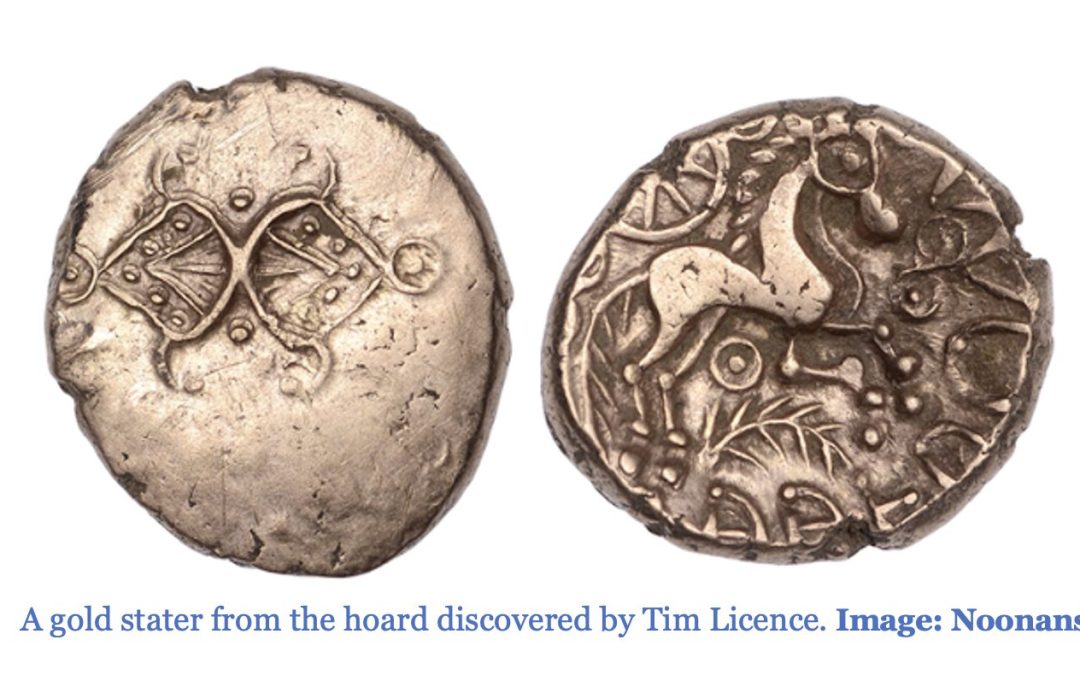
The latest example to hit the headlines involves the consignment to auction of an important partial hoard uncovered in the East of England over the past few years. Recorded properly under the stringent rules of the Portable Antiquities Scheme, it has been identified as the largest known hoard of Iron Age gold coins deposited during the reign of Dubnovellaunos, ruler of the Trinovantes tribe from 25BC-10AD.
The find sheds light on this age of pre-history, while the 16 coins consigned have been released for auction after being assessed by the authorities.
With every box ticked, then, what is the problem?
In short, the individual who made the find and has consigned the coins to auction is an academic archaeologist, Tom Licence, Professor of Medieval History and Literature at the University of East Anglia.
Gamekeeper turned poacher
As far as his academic contemporaries are concerned, this is a case of gamekeeper turned poacher, as an article in the latest copy of The Spectator sets out. Titled How a set of gold coins divided British archaeologists, it explains: “Licence did everything right, but the thought of an Antiquaries fellow selling antiquities has led to a debate about the whole system of collecting and reporting finds.”
It also explains that Tessa Machling, an archaeologist and specialist in gold, recently made a Freedom of Information request and learnt that paying for the whole process of assessment, including salaries for museum curators and liaison officers, costs £8.7 million.
“The metal detecting community pays nothing towards that sum,” the article argues. “They do, however, occasionally get rewarded, and can keep – or sell – their finds. Detectorists gain but contribute nothing, Machling says, who told me [the article’s author] that until recently she’s ‘been shouting into the void’ about this.”
So, one-way traffic on the benefits front, then. Wrong.
As Machling’s own arguments set out, the people who are paid from the largesse raised by the government are the academics, curators, liaison officers and others involved in deciding whether finds constitute Treasure or not. Museums hoping to acquire the best finds need funds to do so. As often as not, these come from private individuals – dealers and collectors a lot of the time. Even the article notes that philanthropists play a big role in this.
As for the idea that detectorists simply enjoy a free ride, this simply illustrates the blinkered attitude of their critics. Detecting is an expensive business – equipment, travel, administration, accommodation etc – usually with no reward. Where they make a find, it is very often after years of disappointment and, as in the case of Tom Licence, it can involve a great deal of work, compliance measures and care to ensure the most vital aspect of this business: the accurate recording of finds in context.
‘Underfunded, overworked and lacking legislation’
“Finds liaison officers, says Machling, are ‘underfunded, overworked and lacking legislation’. She would like metal detectors to be licensed, with a small fee and a commitment to follow agreed standards.”
This is simply wrong. We have The Treasure Act (1996, and amended in 2003) and The Portable Antiquities Scheme, policed by the British Museum, which also oversees the Code of Practice for Responsible Metal Detecting in England and Wales (2017). Together they work more effectively than any other scheme known worldwide, and the resulting discoveries have added an enormous weight of knowledge to the national history and identity.
The problem with a licensing scheme is twofold: the tendency of such schemes to over regulate and be burdensome and punitive; and the risk of people faced with these burdens instead cutting corners by not recording and reporting finds properly.
“Licensing the detectorists would bring another layer of bureaucracy,” writes one commentator under the Spectator article. “A quango set up to administer the licences and before you know it detectorists will need to be DBS checked, have public liability insurance, proof of competency and goodness knows what else. This sounds like public sector overreach for a hobby that benefits historical understanding.”
The bad blood between academic archaeologists and metal detectorists, as well as the wider art and antiques market and collectors, is long standing and has worsened in recent years with the over-politicisation of culture. Museums and their curators, who used to work well and closely with dealers and collectors, now treat them as little more than criminals because that is how so many of the public bodies and campaigners treat them in the quest for control of the sector. This is shortsighted because dealers and collectors tend to handle a great number of items, allowing them to augment their knowledge and expertise regularly – and are often generous donors to public collections. Curators tend to handle fixed collections with little scope for expanding theirs.
It all began with the self-funding amateur collector
Those who rail against the trade and collectors forget that the traditions of preservation, conservation and scholarship, began with the self-funding amateur collector, and that many of the world’s greatest museum collections had their origins in the private holdings of individuals.
Soon to be published in English is The Demonized Collector, a memoir by Dutch dealer Karl Stimm, who contrasts decades of often unpaid effort in helping bring the past to the surface in a responsible manner with the brickbats thrown at him and other dedicated enthusiasts by well-paid academics shouting from the sidelines.
From the comments under The Spectator article, it seems that the public is more enlightened than the world of academia and archaeology, and possesses a more developed sense of natural justice.
Many seem well aware of the time, effort and money put into detecting by the detectorists. One goes as far as to suggest defunding archaeologists and academics and instead using the funds to buy the finds. Not the most helpful suggestion, it does, however, show that those currently pointing the finger at detectorists and the market might find themselves the target of mass criticism if they push too far.

by ADA | Jan 21, 2026 | Views |
Lack of data, high costs, poor resources and risks to human rights continue to blight the mission to trace trafficked cultural property
Study on measures to increase traceability of cultural goods in the fight against cultural goods trafficking at the Member State level and at the EU level (Final report)
This report into what the European Commission believes should be done next to tackle the blight of cultural property trafficking is an eye-opener. It is telling that initial publication should take place just three months before the final enforcement of the previous mass enforcement measure, Reg 2019/880 on import licensing.
Nonetheless, this new report is fascinating because of what it reveals: specifically, the ongoing lack of data despite decades of study and multi-million euro funding for research; and high levels of self-awareness indicating an overwhelming lack of confidence in the viability of what is being proposed here. A continent-wide system linking up all existing databases (and adding new ones where needed) after they have adapted to a single standard could be a very effective means of combatting crime. However, as this 320-page report makes abundantly clear, too many obstacles persist to render this ambition anything but a fantasy.
Essentially the objective of the report is to pave the way for the introduction of a compulsory EU-wide registration and standardised due diligence system for reporting cultural property transactions. The idea is that this would allow national databases to interact with each other to create an EU-wide safety net and monitoring system.
EU-wide standardised network of databases
A continent-wide system linking up all existing databases (and adding new ones where needed) after they have adapted to a single standard could be a very effective means of combatting crime. However, as this 320-page paper makes abundantly clear, too many obstacles persist to render this ambition anything but a fantasy. Here are a few of the issues it raises:
– What would an effective single standard look like?
– Who would decide on what should be included?
– How do you define the parameters of what should be included on the databases?
– How do you get all Member States to comply when only nine of the 27 currently have databases and they are incompatible?
– What value threshold would you introduce if, as stated, the intention is to focus on high value goods (a wise course)? Matching the AML standard, as mooted, would mean €10,000, but that is very low and would risk overwhelming business, customs and possibly the databases themselves.
– Who would have access to the databases bearing in mind the historic protectionism exercised by existing databases? The report acknowledges that they would be ineffective if not publicly accessible.
– How do you persuade Member States to proceed when they have been unwilling so far and would largely have to fund the project themselves and set up support and enforcement teams? Initial estimated costs are €36.8 million, with an extra €383 million to link up Member States effectively.
– Why do we need further regulation when the same objectives are covered by existing measures such as EU Reg 2019/880 on import licensing?
– The report repeatedly emphasises the need for EU standards and human rights to be honoured, yet acknowledges just as repeatedly that what is being proposed risks breaching them.
As revealing is what comes in the preamble, where we discover the following:
– Data is hard to find and reliable data is largely non-existent, but art and antiques are seen as relatively high risk because they can be traded.
– Compliance value thresholds and claims of crime levels rely largely on guesswork.
– Law enforcement and others mostly extrapolate international crime levels from a few individual cases.
– Many of those cases involve art and criminals but not the art market.
– Risk categorisation for Terrorism Financing and Money Laundering are guesswork, with nation states acting on wish lists from law enforcement bodies and the belief that the risk must be high because it involves goods that can be traded.
Art Market input
As explained on page 277 of the report, apart from a few unspecified targeted interviews, consultation on this study with the art market was as follows:
An online survey targeting art market participants was launched in April 2024 and data was exported in July 2024. The survey aimed at gathering information about perceptions of the prevalence of trafficking, transaction recording practices and administrative costs and compliance costs incurred. A total of 32 replies were received from art dealers, galleries, auction houses, antique dealers and gallerists from Austria (1), Belgium (1), Czechia (1), Germany (11), France (2), Portugal (1), Sweden (6), Switzerland (1), the Netherlands (4) and the United Kingdom (3).

by ADA | Jan 5, 2026 | Views |
No questions asked; no curiosity – how the media deals with attacks on the art market
One of the most concerning aspects surrounding fake news as it applies to the subject of cultural heritage is the widespread failure of the media to address the issue properly.
While a daily stream of reports chide the international art market as a haven for criminals involved in theft, smuggling and money laundering, vanishingly few journalists ever seem to check the validity of claims being put out by governments, law enforcement, NGOs and others.
In 2022 and 2023, it appeared that we had turned a corner when European Commissioners and senior officials at UNESCO finally accepted that massively inflated claims regarding the value of illicit material being trafficked across the world were simply untrue.
One of the most important papers on the matter at the time was the Cambridge University Press published The illicit trade in antiquities is not the world’s third-largest illicit trade: a critical evaluation of a factoid. Its authors, Drs Neil Brodie and Donna Yates had long been critics of the trade, but had come to agree with the evidence-based arguments promoted by the industry that the claims were false and actually harmed the interests of heritage and culture because they risked encouraging further thefts.
Regulation that has the potential to harm legitimate trade has come into force on the back of false data promoted by those who wish to prevent that trade – the European Union’s new import licensing law 2019/880 is a case in point.
The false impression created by bilateral agreements
The rise of bilateral agreements, particularly between the United States and other countries (at least 35 now relating to cultural heritage) spreads a false impression that countries of origin are able to reclaim artefacts because US law enforcement is doing a great job of finding looted and trafficked pieces. The reality is that these agreements bypass the usual property rights cited under the US Constitution, as well as dispensing with the need for evidence, both of which would protect citizens under normal circumstances. Instead, they effectively wave through a kleptocratic system that allows the state to seize its people’s possessions and use them for soft-power purposes. Then the media, on a global basis, simply parrot the claims of the authorities rather than asking for evidence that the items in question were, indeed, illicit.
This is all bad enough, but the failure of the media to highlight the scandal, even when presented with the evidence, effectively makes it complicit. It’s almost as though reporters are simply reprinting the media releases from the Manhattan District Attorney’s office and the State Department. No questions asked; no curiosity.
The same unquestioning approach has made gospels out of official reports which simply do not stand up to scrutiny, such as the deeply flawed February 2023 Financial Action Task Force report into money laundering, trafficking and terrorism financing related to art, Money Laundering and Terrorist Financing in the Art and Antiquities Market.
It would be easy to blame the lack of training and resources for the media’s failure to examine these issues more robustly or even carry out basic fact checking. However, as all this has gone on, many leading media outlets have indeed taken a robust approach, but only where articles support the market position and expose the untruths leveled at it.
Articles supporting the market are ‘lost’ on submission
Antiquities Forum knows of numerous instances where articles pitched with every fact supported by detailed footnotes and/or embedded links to primary sources have been ‘lost’ by the commissioning editor – sometimes two or three times – with renewed submissions ultimately ignored or refused without reason. These are articles from expert writers and journalists who have had no problem securing publication with those same titles on other subjects.
At the same time, stories that are patently untrue or unsupported by evidence are published without question – clearly without any fact checking going on.
Comments under articles have been equally ‘mislaid’, ignored or simply censored if they challenge market critics. It seems no one in the media is interested in the widespread abuse of citizens’ rights, including the reversal of the burden of proof – now commonplace – when it comes to ownership, so that your property is considered stolen unless you have the paperwork to prove that it is not. Surely the media should be interested in something as fundamental as the decision to treat people as guilty rather than innocent as a basic standard of civilised society. But apparently not.
As a former member of the Cultural Property Advisory Committee (CPAC) that briefs Congress, lawyer Peter Tompa is a noted authority on the law as it applies to cultural heritage. A prominent campaigner among the coin collecting community, senior official of the Global Heritage Alliance and author of the Cultural Property Observer blog, as well as numerous articles in Cultural Property News, he is exactly the sort of expert that the media should be falling over themselves to interview, especially as he is hugely concerned with the attack on citizens’ rights. Instead, as he has just explained, he appears to have been blacklisted.
Market commentator blacklisted
Following a recent article in influential Washington publication The Hill by cultural property lawyer Rick Mr. St. Hilaire – no friend of the market over the years – Tompa found his own comments on the issue barred.
“The Hill Newspaper refused to publish this comment, supposedly because it violates their ‘community standards’,” he explained.
“Also, Mr. St. Hilaire disallows comments on his posts, except for people he is already connected with. So, here it is.” What Tompa explains, but The Hill did not, was that St Hilaire “is associated with an archaeological advocacy group that has received substantial State Department funding as a ‘soft power measure’”.
Among Tompa’s disallowed expert critique of St Hilaire’s comments was the following: “The major issue with his punitive approach is that it seeks to enforce confiscatory foreign laws here and assumes that even common items like historic coins purchased from legitimate markets in Europe are ‘stolen’ if they don’t have a long document trails proving ‘licit’ origins. Due process for American citizens should be the utmost consideration. Not using criminal law to threaten collectors on behalf of foreign governments, particularly authoritarian regimes in the Middle East which declare anything old State property.” Tompa goes on to explain how he then tried another version, complete with citations, but The Hill wouldn’t publish it, either.
“On reflection, perhaps that’s not all that surprising because The Hill has rejected other opinion pieces from me in the past (including the one quoted at the end that was ultimately published by the American Bar Association) and others representing collector interests. Meanwhile, the Antiquities Coalition and others with similar views seem to get what they want published in The Hill Newspaper. In any event, judge for yourself if this post violates ‘community standards’ or if it’s just another case where the views of collectors and the trade are being suppressed by a ‘woke’ press.”
And in a final challenge to The Hill, he adds: “If you are really interested in a conversation you will publish this comment. As archaeologists claim, context is important.”
Whatever the media’s reason for failing this challenge, from a journalistic perspective it makes no sense to duck what is really a sensational story of widespread collusion and apparent corruption at the heart of the State. Does no one want a Pulitzer Prize anymore?
by ADA | Nov 25, 2025 | Views |
Dispute shows that the ‘moral’ case is not always clear cut
Passed as part of the Charities Act 2022, measures that have been suspended relating to deaccessioning in museums and the return of objects to source countries will now come into force.
The idea is to make it easier for institutions to return disputed objects on moral grounds. This is not as easy as it might seem, however, as different moral codes apply depending on who and where you are.
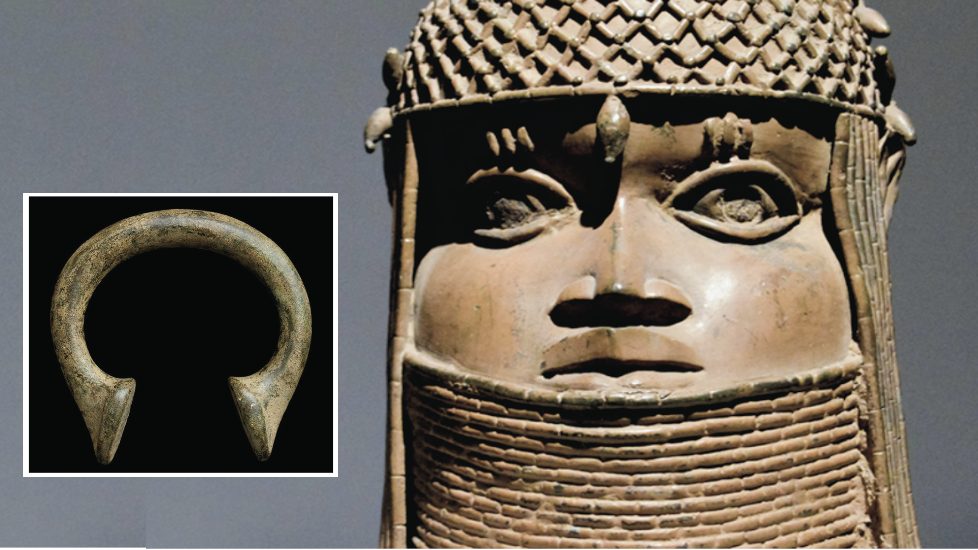
Evidence of this can be seen in the Horniman Museum’s return of Benin Bronzes to Nigeria in 2021, under earlier legislation. While the moral grounds for sending the bronzes back were their status as looted items from the British punitive expedition of 1897, the museum ignored the fact that they were the product of slavery – literally so as they were made from slave currency – which had enriched the Oba of Benin.
As the BBC revealed on November 13, however, the bronzes that have been returned have sparked widespread controversy. This is firstly because the Nigerian government has handed them over to the current Oba, thereby rewarding the direct descendant of one of Africa’s worst slavers. The descendants of former slaves in the US had protested through the courts against the return of bronzes from The Smithsonian, but lost their case because, as the bronzes had already been returned, the court decided it lacked jurisdiction in the matter.
The Oba’s links to the history of slaving have been entirely expunged from the record in Nigeria and are largely overlooked by the world’s media and those who have pressed for repatriation, but that does not mean they have been forgotten.
New museum remains shut as Oba launches legal case
Now the bronzes’ new home, the much-anticipated Museum of West African Art (MOWAA) due to open in Benin, the capital of the Edo region of Nigeria, remains shut. Its construction and fitting out has taken five years, and the idea is for it to provide jobs and boost the local economy. Funded to the tune of $25 million by British Museum fund-raising donations, among others, it has found itself at the centre of a political storm for various reasons, with permission for the land to be used to build the museum now revoked.
“Much of it comes down to internecine rivalries at a local state level, as it was Edo’s previous governor Godwin Obaseki – whose term in office ended last year – who was a major backer of the museum,” the BBC reports.
“And it seems the administration of the new governor, a close ally of the local traditional ruler, known as the Oba, may want more of a stake in the project. The protesters on Sunday, for example, were demanding that the museum be placed under the control of Oba Ewuare II.”
True enough, as it turns out, according to the Benin media, which reported on November 24 that the Oba is attempting to wrest control of the returned artefacts and any fund-raising operations linked to them by suing the museum promoters and demanding that neither the museum nor anyone else should be dealing in Benin artefacts without his permission.
“According to available court documents, the claimant is contending among others, that the Oba of Benin, being the sole custodian of the culture, tradition and heritage of the Benin Kingdom, is the only rightful person to determine where the returned looted artefacts and other items of Benin heritage should be kept,” The Benin Sun reports.
The Oba is calling for the court to declare him the sole owner, custodian and manager of repatriated looted Benin artefacts.
He is also demanding that no one else – neither individual nor institution – should be able to raise funds from outside Nigeria in his name, and he wants a perpetual injunction “restraining the defendants, their servants, privies or agents from establishing, opening and operating any museum in Benin City, Edo State, dealing with Benin artefacts without the consent of the Oba of Benin”.
One rule for the governor, another for the Oba, when it comes to family connections
In May 2023, Cambridge University’s Museum of Archaeology and Anthropology delayed the return of 100 of the bronzes when it feared that they would not be put on public display after outgoing President Muhammadu Buhari decreed that the Oba was the rightful owner of all returned Benin Bronzes and was responsible for the management of all places where the artefacts were kept.
One of the curious aspects to the internal political disputes over the issue in Nigeria has been the objection to former Edo state governor Obaseki, who was behind the establishment of MOWAA. The objection rests on the fact that he is the direct descendant of a palace official who was appointed as prime minster by the British after the 1897 punitive expedition. If such a direct link would disqualify him from involvement, why is the same standard not applied to the Oba himself following his forebears’ bloody past?
Clues come from reporting on the Restitution Study Group, which has led the campaign to retain the bronzes in public institutions within the United States: one argument is that while the manilla slave currency was indeed used to make the bronzes, some of it came from trading other goods, so it is impossible to say which was which. Another is the view shared by Nigerian art historian Chika Okeke-Agulu, a professor at Princeton University and an activist at the forefront of the campaign to return looted artwork. He dismissed the Restitution Study Group’s leader, Ms Farmer-Paellmann’s comments as sounding “like the arguments that white folks who don’t want to return the artefacts have made”. Whether this is true or not, he does not address the historic Obas’ role in sending more than 100,000 people into slavery down the years.
What will the governments and museums around the world, so keen to hand back the bronzes for public benefit, do now?
- Image top: A Benin bronze, and (inset), a manilla, probably made from a brass composite (Ashmolean Museum). The name comes from manilha, the Portuguese word for a bracelet.
Recent Comments