For years now, the art market’s trade associations and campaign groups have looked on with frustration and horror as the Manhattan District Attorney’s office has set about dismantling much of the New York trade. Collectors, dealers and museums within the city and far beyond have also lost their property and faced the intimidatory tactics of Assistant District Attorney Matthew Bogdanos and the Antiquities Trafficking Unit (ATU) in their crusade to seize cultural objects and hand them back to their countries of origin.
Much of the time, these seizures and handovers have shared a single feature: the lack of proof that the objects in question were illicit. What evidence may have been available to the authorities has seldom been shared with the public who pay for the ATU, even on request.
Instead, the threat of criminal prosecution, together with the knowledge that even if they prove their innocence they must still pay all the substantial costs involved, have persuaded those targeted to yield up their possessions to the authorities, leaving the ATU’s tactics unchallenged.
Beyond the seizures themselves, further concerns have arisen over the fate of artefacts, such as when the DA’s office proudly handed back a series of Tibetan items – not to Tibet but to its occupying oppressor, China.
Now, as the New York Times and expert cultural property lawyers have reported, the ATU’s inquisition may be over – at least for the moment.
Art Institute of Chicago proved the vital catalyst
The catalyst was the Art Institute of Chicago’s (AIC) decision not to cave in to the ATU’s demands but to fight back instead.
It went to appeal over a 2023 court decision to allow the seizure of a drawing by the artist Egon Schiele from its collection as a suspected Nazi-looted artwork.
The seizure was not based on proof of the drawing being illicit, but on claims from the heirs of the original owner coupled with what has been an effective legal loophole that paved the way for more than 100 such seizures by the ATU under Bogdanos.
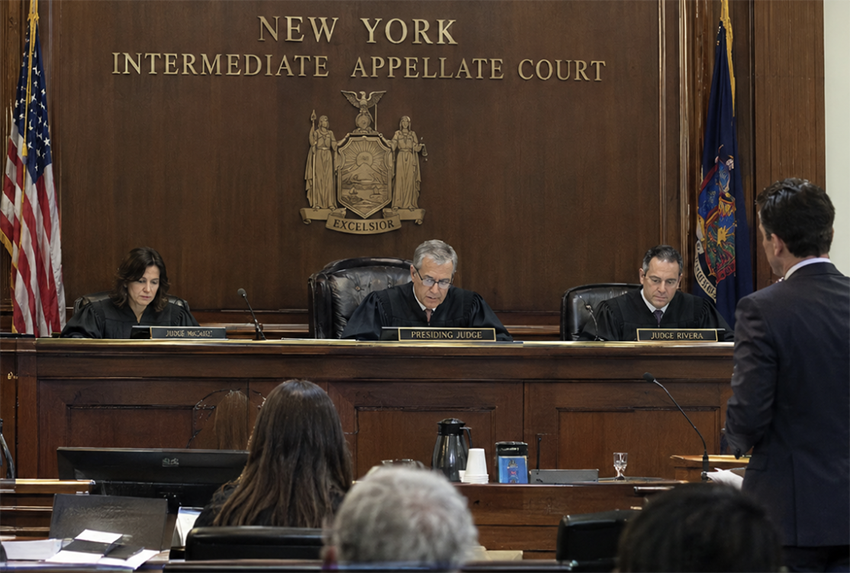
The New York Intermediate Appeal Court gave no view as to whether the drawing was illicit or not but ruled that the ATU’s means of justifying the seizure – the legal loophole – were not valid.
That loophole is New York Criminal Procedure Law § 690.10 and New York Penal Law § 450.10. Law § 690.10 requires reasonable cause to believe the item under question is stolen or otherwise unlawfully possessed to justify seizure, which did not apply in this case, according to the Intermediate Appeal Court. As Cultural property lawyer Nicholas M. O’Donnell, who spoke to the NYT on the matter, explained in his nicksartlaw substack article, “Section 450.10 concerns property seized in connection with a criminal proceeding where ‘satisfactory proof of title’ can be shown”. In this case, such undisputed title could not be shown, and no criminal proceedings were involved.
Ownership rights disputed in the Schiele case
“The ATU and DA have long taken the view that ‘a civil-like proceeding’ may be carried out—with or without a pending criminal case—in order to ‘return’ the paintings to the ‘rightful owners’,” writes O’Donnell. “To do so, the ATU would apply to the criminal court for a turnover order, usually supported by a waiver by the current owner.”
Although the definition of ‘rightful owners’ can be highly subjective, this tactic has worked until now because, as explained above, the ATU’s targets have rolled over when faced with the possible prospect of criminal proceedings, leaving that prospect untested. The AIC effectively called Bogdanos’s bluff, and the Intermediate Appeal Court ruling is the result.
In the case of the Schiele, ownership rights are disputed, and the justification for its seizure and return to the heirs of the original owner is not clear, because it is claimed that title was transferred legally to the owner’s sister-in-law, and the drawing was disposed of later.
As O’Donnell goes on to explain, “The DA is wrong about the scope of Section 450.10. As the Appellate Division notes, ‘Penal Law § 450.10(5) was designed to provide an expedient means for the return of stolen property to the readily identifiable owner of that property; it was not designed to address complicated, disputed issues of ownership. Thus, Penal Law § 450.10 does not provide for adjudication of disputed property rights.’ This eliminates the vast majority of the ATU’s activity.”
O’Donnell also notes that with no associated criminal case (as well as the doubt over dispute over legal ownership) no criminal justification exists for the seizure.
Welcome check on reversing the burden of proof
“As a result, many of the kinds of retrievals the DA has secured in the past where he alleged only absent ‘conspirators’ or gaps in provenance information can no longer be brought.”
From the Antiquities Forum’s (IADAA and the Antiquities Dealers’ Association) perspective, the ruling is particularly important because it acts as welcome check on the spread of the reversal of the burden of proof, an insidious and highly questionable ‘ethical’ trend to assume guilt unless innocence can be proved. This may be convenient for the authorities in cases involving property where provenance is very often incomplete, such as with ancient art, but it has frightening implications for the long term interests of justice and human rights.
The DA’s office is currently keeping its own counsel on what to do next, and the Intermediate Appeal Court ruling may be subject to appeal itself – cultural property lawyer Michael McCullough also posting on Linked In sees this as inevitable.
O’Donnell is clear on the current outcome, calling the ruling “a deserved rebuke in a case that should never have been brought” that “may spell the end of the Manhattan District Attorney’s so-called Antiquities Trafficking Unit as we know it”.
Having said that, ADA Bogdanos is a highly determined individual, and it would be foolish to underestimate his resourcefulness. Nevertheless, this decision has been a sorely needed reassurance that museums, collectors and the trade do have rights under the law, and the courts will back them where justified. As McCullough posted: “The court was particularly concerned that AIC had been deprived of the protections ordinarily available in a civil action.”
The following is the original version of a letter sent by ADA chair Joanna van der Lande and published by the Art Newspaper on page 16 of their July/August 2020 issue
While Europol, Interpol and the World Customs Organisation are very good at grabbing headlines, experience tells us that subsequent requests for more detail on the major international operations cracking down on cultural heritage trafficking tend to fall on deaf ears.
The latest set of seizures and arrests across 103 countries as reported in the Art Newspaper on May 8 (International crackdown on art trafficking leads to 101 arrested and 19,000 artefacts recovered) gives rise to the same set of questions we and other trade associations have been asking for years now:
How much of this material is fake?
How much can be traced back to vulnerable archaeological sites?
Who has been arrested and how many of them are actually part of the art market as opposed to ordinary criminals or gangs?
How much can be traced back to terrorist groups?
How much of it qualifies as cultural property under the terms of the UNESCO Convention?
While the headlines sound impressive, the organisations involved continue in their failure to answer on-going questions about the true effectiveness of these operations. Previous investigations undertaken by the Antiquities Dealers’ Association (ADA) and the International Association of Dealers in Ancient art (IADAA), including direct consultation with the authorities, have exposed worrying gaps in intelligence gathering.
In February 2018, for instance, in responding to an IADAA request for confirmation about the number of countries involved in the original Operation ATHENA, as well as information regarding the volume, value and nature of major items seized during that operation, Europol’s Corporate Affairs Bureau told them: “Unfortunately we do not have such information at hand as we only have a fragmented picture: this operation was coordinated between three partners – us, INTERPOL and the WCO.”
This was a surprising response from one of the main players involved, especially as they had already issued a large number of detailed claims in a press release.
Publicity surrounding this latest operation, conducted in November 2019, focuses chiefly on antiquities and ancient art from around the globe, but does not attempt to distinguish between the genuine and the fake – a key factor in tackling crime, as St John Simpson of the British Museum, an adviser to UK law enforcement, has argued in other recent news reports linked to the seizure at Heathrow last year.
The authenticity of the unique and rare Tumaco gold mask, referred to among the Athena II highlights by Europol, for example, has been called into question by some well placed experts in the field.
Previous operations gave the impression of having a major impact on antiquities trafficking and even the financing of terrorism, although closer inspection showed this not to be the case.
In November 2016, Operation Pandora involved a joint customs, Interpol and Europol operation across 18 European countries. Together they searched 48,588 people (81.6% of them in Bulgaria); 29,340 vehicles and 50 ships. This led to 75 arrests (65 of them in Bulgaria) and the seizure of 3,561 objects in total, comprising:
1000 objects from a single seizure in Poland involving an illegal metal detectorist. These comprised spent bullet cartridges and rusted gun stocks from WW2, which qualify as cultural property under Polish law
500 archaeological objects (mostly coins) in Murcia, Spain
400 coins relating to online adverts
Of the remaining 1600 objects, Europol said that “several” were “of great cultural importance in the archaeological world, such as a marble Ottoman tombstone and a post-Byzantine icon depicting Saint George, along with two Byzantine artefacts”. None of these items was rare, valuable or culturally significant to the extent claimed. All were seized in Greece, another country that is not a war zone, nor did they appear to originate in war zones, although seizing such material was a main objective of the operation. This is not to say the looting of such cultural heritage is not of as much concern to members of the legitimate antiquities trade as it is to an archaeologist.
Notwithstanding this, if these comprised the highlights of the operation, as stated, where were the rare antiquities from war zones, or material associated with terrorism financing, whose intended seizure was the mainspring of this operation?
The tendency to count every coin in a seizure individually rather than as a single seizure also risks inflating the operation’s impact.
A similar pattern of claims accompanied by detailed statistical information released by Europol and the WCO arose for Operation Odysseus in June 2014 and the first Operation Athena in November 2017. However, the ADA and IADAA are not aware of any update on any of these operations, such as confirmation of how many of the arrests and investigations led to successful prosecutions, or whether any seizure at all has led back to trafficking from Syria or Iraq or the financing of terrorism, the twin lynchpins behind these operations. Surely such information constitutes the true measure of these operations’ success and should be made public?
The WCO Illicit Trade report 2017, published in December 2018, did reveal that the largest quantity of items of cultural property seized and reported through their network for that year was a consignment of around 3000 LPs being exported to Turkey from The Netherlands.
While Facebook and other social media platforms present a significant challenge in the fight against crime, it should be noted that Facebook has been proactive in seeking trade help in tackling the issue, having contacted us last year on this matter.
It is disturbing that in her official press release, Catherine de Bolle, Europol’s Executive Director, resurrects the now discredited link between antiquities and trafficking in weapons and drugs. It took years for Interpol to remove misleading claims of a similar nature from its website where, at the same time, it admitted that it had never had any information to show that cultural property trafficking was as significant as that in drugs and weapons, nor was ever likely to have such information. The latest WCO Illicit Trade Report, covering 2018 and seizures reported through its network, showed that while drugs accounted for 32% of all trafficking seizures globally and weapons for 3.6%, cultural heritage – including all art, antiques and collectables, not just antiquities – accounted for 0.08%.
If international law enforcement is so keen to promote its work on these operations, then it should be equally eager to publish their ultimate results in terms of successful prosecutions and evidence clearly demonstrating links to terrorism funding.
Such follow-ups are important because the successes claimed by these operations have been used frequently in the media and by politicians in the EU, as well as elsewhere, to support demands for further restrictive legislation controlling the international art market. If the market is to pay the price, it has a right to know why.
Joanna van der Lande Chair Antiquities Dealer’s Association 15 May 2020
Recent Comments