Who is really digging a hole for themselves with this attack on amateur metal detectorists?
Academic archaeologists do not have a monopoly on ethics and rights when it comes to investigating the past, whatever they may think
Only academics, archaeologists, museums, NGOs and governments should be allowed to make money from ancient objects. Everyone else can – and should – fund their work, but must not be allowed to benefit in any way financially from the sector.
How does that sound?
Whatever your viewpoint, this is effectively what interested parties outside the art and antiques industry are demanding from dealers, auction houses and collectors.
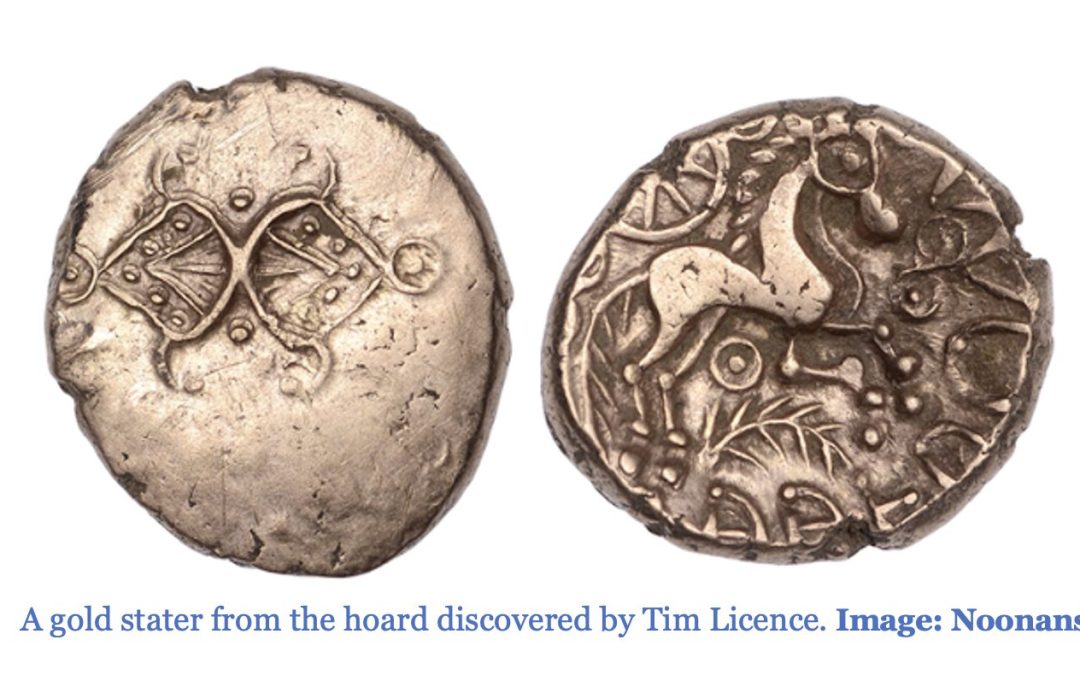
The latest example to hit the headlines involves the consignment to auction of an important partial hoard uncovered in the East of England over the past few years. Recorded properly under the stringent rules of the Portable Antiquities Scheme, it has been identified as the largest known hoard of Iron Age gold coins deposited during the reign of Dubnovellaunos, ruler of the Trinovantes tribe from 25BC-10AD.
The find sheds light on this age of pre-history, while the 16 coins consigned have been released for auction after being assessed by the authorities.
With every box ticked, then, what is the problem?
In short, the individual who made the find and has consigned the coins to auction is an academic archaeologist, Tom Licence, Professor of Medieval History and Literature at the University of East Anglia.
Gamekeeper turned poacher
As far as his academic contemporaries are concerned, this is a case of gamekeeper turned poacher, as an article in the latest copy of The Spectator sets out. Titled How a set of gold coins divided British archaeologists, it explains: “Licence did everything right, but the thought of an Antiquaries fellow selling antiquities has led to a debate about the whole system of collecting and reporting finds.”
It also explains that Tessa Machling, an archaeologist and specialist in gold, recently made a Freedom of Information request and learnt that paying for the whole process of assessment, including salaries for museum curators and liaison officers, costs £8.7 million.
“The metal detecting community pays nothing towards that sum,” the article argues. “They do, however, occasionally get rewarded, and can keep – or sell – their finds. Detectorists gain but contribute nothing, Machling says, who told me [the article’s author] that until recently she’s ‘been shouting into the void’ about this.”
So, one-way traffic on the benefits front, then. Wrong.
As Machling’s own arguments set out, the people who are paid from the largesse raised by the government are the academics, curators, liaison officers and others involved in deciding whether finds constitute Treasure or not. Museums hoping to acquire the best finds need funds to do so. As often as not, these come from private individuals – dealers and collectors a lot of the time. Even the article notes that philanthropists play a big role in this.
As for the idea that detectorists simply enjoy a free ride, this simply illustrates the blinkered attitude of their critics. Detecting is an expensive business – equipment, travel, administration, accommodation etc – usually with no reward. Where they make a find, it is very often after years of disappointment and, as in the case of Tom Licence, it can involve a great deal of work, compliance measures and care to ensure the most vital aspect of this business: the accurate recording of finds in context.
‘Underfunded, overworked and lacking legislation’
“Finds liaison officers, says Machling, are ‘underfunded, overworked and lacking legislation’. She would like metal detectors to be licensed, with a small fee and a commitment to follow agreed standards.”
This is simply wrong. We have The Treasure Act (1996, and amended in 2003) and The Portable Antiquities Scheme, policed by the British Museum, which also oversees the Code of Practice for Responsible Metal Detecting in England and Wales (2017). Together they work more effectively than any other scheme known worldwide, and the resulting discoveries have added an enormous weight of knowledge to the national history and identity.
The problem with a licensing scheme is twofold: the tendency of such schemes to over regulate and be burdensome and punitive; and the risk of people faced with these burdens instead cutting corners by not recording and reporting finds properly.
“Licensing the detectorists would bring another layer of bureaucracy,” writes one commentator under the Spectator article. “A quango set up to administer the licences and before you know it detectorists will need to be DBS checked, have public liability insurance, proof of competency and goodness knows what else. This sounds like public sector overreach for a hobby that benefits historical understanding.”
The bad blood between academic archaeologists and metal detectorists, as well as the wider art and antiques market and collectors, is long standing and has worsened in recent years with the over-politicisation of culture. Museums and their curators, who used to work well and closely with dealers and collectors, now treat them as little more than criminals because that is how so many of the public bodies and campaigners treat them in the quest for control of the sector. This is shortsighted because dealers and collectors tend to handle a great number of items, allowing them to augment their knowledge and expertise regularly – and are often generous donors to public collections. Curators tend to handle fixed collections with little scope for expanding theirs.
It all began with the self-funding amateur collector
Those who rail against the trade and collectors forget that the traditions of preservation, conservation and scholarship, began with the self-funding amateur collector, and that many of the world’s greatest museum collections had their origins in the private holdings of individuals.
Soon to be published in English is The Demonized Collector, a memoir by Dutch dealer Karl Stimm, who contrasts decades of often unpaid effort in helping bring the past to the surface in a responsible manner with the brickbats thrown at him and other dedicated enthusiasts by well-paid academics shouting from the sidelines.
From the comments under The Spectator article, it seems that the public is more enlightened than the world of academia and archaeology, and possesses a more developed sense of natural justice.
Many seem well aware of the time, effort and money put into detecting by the detectorists. One goes as far as to suggest defunding archaeologists and academics and instead using the funds to buy the finds. Not the most helpful suggestion, it does, however, show that those currently pointing the finger at detectorists and the market might find themselves the target of mass criticism if they push too far.
Recent Comments