by Antiquities Dealers' Association | Jul 27, 2017 | Uncategorized, Views |
COMMENT: A perceived lack of regulation, the rise of art as an alternative asset class and conflict in the Middle East present a triple whammy for an unprepared art market. What has happened to the market? And what must happen now? asks Ivan Macquisten

Antiques Trade Gazette’s current report on how the trade is fighting back against misperceptions and propaganda.
The international trade in antiquities has been the focus of sustained criticism over the past few years as a result of the wars in Syria and Iraq. Anti-trade campaigners – academics, archaeologists, politicians and others – who have been trying to shut down the legitimate trade for years, have seized this opportunity to lobby hard for new regulation, ever-tighter restrictions on trade and more draconian punishments for even slight infringements. There have been calls for the private ownership of antiquities to be made socially unacceptable.
Fake news
The dissemination of biased or badly conducted research and questionable relationships with the media, much of which appears complicit, or at least complacent, has not helped. This is part of the widely recognised ‘fake news’ issue, as 24-hour rolling reporting combined with declining resources within the media – particularly in the press – rob journalists of the opportunity to investigate in any depth or check facts. This makes them increasingly vulnerable to unscrupulous interests that want to present propaganda as news. Outlandish figures relating to the size of the problem of looted material coming out of Syria, for instance, have been widely accepted as utterly unfounded by all sides in the debate for some time now, yet continue to be peddled by a number of quite prominent sources.
This has led to criticism from anti-trade campaigners themselves. Dr Neil Brodie’s article for the European Union National Institutes for Culture, says the propagandists exaggerate the problem to attract government attention and more funding. This leads to inappropriate policy, which in turn damages the very nations and cultural heritage institutions they seek to protect.
Inaccuracies
Even government research and publications, in the US, Germany and elsewhere fall short of the standards that should be expected. Recently, Homeland Security Today, the news and views website for the eponymous US department, published my critique of Homeland Security’s report last October, Cash to Chaos, dismantling ISIS’ financial infrastructure.
The report’s small section on antiquities was riddled with inaccuracies, the footnotes quoting out-of-date and long-discredited media articles as primary sources of evidence to support the claims. In some cases, the reports mentioned in the footnotes did not contain any of the evidence referred to at all. If this can happen with Homeland Security, whose report was leapt on by campaigners as further proof of the antiquities problem, who else can be trusted?
Many of those who want to see an end to any trade, legitimate or not, dedicate most of their working lives to this cause. They tend to be very well funded and organised, and have the ear of governments, law enforcement and NGOs, which do not appear to appreciate the distinction between those who trade lawfully and those who do not.
The effectiveness of these campaigners is not to be underestimated, especially as the antiquities sector in particular and the art market in general have been woefully unprepared to tackle such unrelenting criticism.
All of this is not helped by the perception that the wider art market is fairly lawless. True, it is not directly regulated in the way that finance, health, insurance and the law are, but there is direct regulation, and plenty of it (see the British Art Market Federation’s list of regulation. A dealer’s liability under the new Cultural Property [Armed Conflicts] Bill is a case in point: potentially, they can be jailed for up to seven years for even unintentionally breaking the law.
How it all changed in 2008
What the art market has failed to understand until quite recently is that everything changed in 2008. When the markets crashed and pulled the rug out from under gilts and bonds, those traditional safe havens of wealth, the relative risk of art as a store of value diminished, making it much more attractive as an alternative asset class. The banks and wealth managers started to advise clients to diversify their portfolios.
Where money heads, attention follows – and not just from investors. Regulators, governments and criminals also turned their gaze on the art market as a significant influx of cash created the potential for money laundering, market manipulation and other undesirable activities. Transparency became the buzzword of any discussion about the market, but transparency is just the outward manifestation of the real problem: lack of trust.
The market generally was unused to such scrutiny and ill equipped for what it would mean: media attacks, tighter controls, new laws and wider attempts at regulation. Many continue to bury their heads in the sand, but others have realised they must act now to build confidence with the authorities and public before it is too late.
Despite this, most have still not accepted that such a programme requires a significant investment of money and time, the sort of commitment on which the other side in the debate has long been able to rely.
Against this background, and the emerging Syrian conflict, the antiquities trade found itself in the front line. What makes life even harder for the trade is the role antiquities now play in international diplomacy. Nation states are using cultural property or heritage as a political tool in negotiations, to curry favour with other countries or to burnish their credentials as virtuous campaigners for the greater good.
The trade fights back
Around two years ago, the Antiquities Dealers Association (ADA) in the UK and then the International Association of Dealers in Ancient Art (IADAA) recognised that they needed to fight back. As such, they realised they must revisit their own codes of conduct and improve procedures and methods of communication, whether via their websites, direct mail, PR and media opportunities or their relationships with the various authorities.
They have been very effective in doing so, leading the way in raising wider art market standards – as parliament has recognised – and shaping debate with lawmakers, law enforcement and the media at national and international levels.
Their success can be attributed in part to their thorough research and presentation of arguments supported by independently verifiable evidence, in part to the dedication of their representatives, and in part to the fact that the anti-trade campaigners have not been used to having their propaganda challenged and so are sometimes inattentive when it comes to detail.
Nonetheless, rich and powerful anti-trade interests – supported by countries such as Egypt that wish to reclaim their cultural property, regardless of whether it now rightly belongs to others – have persuaded governments to introduce major changes in the law in Germany, the UK and the United States, laws introduced as a result of mistaken views of where problems lie.
The rather less well-funded antiquities trade is fighting an effective rear-guard action, but very much against the odds. What the trade does have is a network of knowledgeable experts, a sophisticated strategy and a wealth of evidence and data to support its case; it is also getting better organised, with disparate groups in the USA coming together to fight for better understanding and a fairer deal. It needs better financial and strategic support as the trade improves its own relationships with decision-makers further and continues to fight for recognition in national and international debate.
Trade organisations have already tried to engage with their fiercest critics, but the signs so far are that campaigners have no intention of giving any ground. I can understand this: they have had unrivalled success so far and can’t see any reason to compromise. It is clear that many simply believe that any trade whatsoever means providing cover for the crooks. What may surprise them is that legitimate trade is the arch-enemy of the crooks, as criminal activity damages the reputation of those who trade lawfully.
The wider art market needs to wake up fully to its challenges, as demonstrated so clearly already in the microcosm of the antiquities market. That means better self-regulation in the form of codes of conduct, ethical behaviour and transparency, as well as a more effective public charm offensive, with the trade associations taking a prominent role.
This article first appeared in the July/August 2017 issue of the RICS property Journal
See also www.imacq.com
by Antiquities Dealers' Association | Mar 2, 2017 | Uncategorized, Views |
ADA adviser Ivan Macquisten’s article on this subject has finally been published by Homeland Security Today, more than five months after it was commissioned and submitted. This commentary arose from his critique of Homeland Security’s Cash to Chaos report, an assessment of ISIS funding published in early October, that he argued was riddled with inaccuracies, at least in part because it appeared to have taken its information from discredited media sources, as shown in its own footnotes.
by Antiquities Dealers' Association | Jul 26, 2016 | Uncategorized, Views |
Misinformation, propaganda and a reliance on prejudice rather than a dispassionate assessment of the facts continue to blight the debate over looted antiquities. Those wishing to fight the criminals would do better to work with the legitimate trade, which is keener than anyone to stop the crooks.
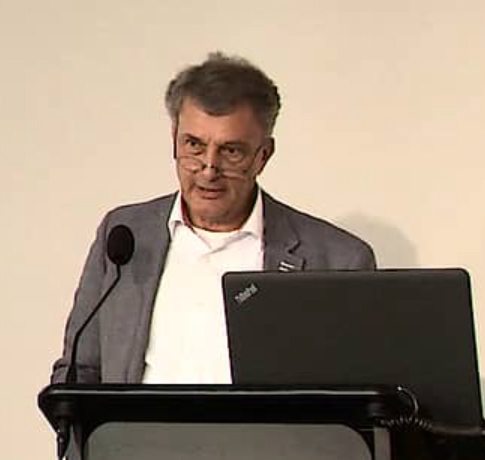
These are arguments put forward by Vincent Geerling, chairman of the International Association of Dealers in Ancient Art (IADAA), during the following speech at the Brussels Ancient Art Fair (www.baaf.be) on June 10th 2016 as part of the lecturing programme, “Art Connoisseurs”. A link to the video of this speech appears at the bottom of this article.
Ladies and gentlemen. First I would like to thank Art Connoisseurs for inviting me as chairman of IADAA to contribute to this programme. This is a nice opportunity for me to talk about collecting antiquities. I have learned that there is a lot of misunderstanding about collectors of ancient art and the legitimate trade, so I will use the opportunity to clarify some major issues. The second part of my presentation will cover the way the media have reported the current conflict in the near east, especially illegal digging, smuggling and the alleged sale of illegal antiquities as source of terror financing.
But before I start, let me first make it perfectly clear that,
- The trade is as horrified by the destruction and iconoclasm as anyone else and we share a common cause in wishing to defeat it.
- The trade has more incentive than anyone else to stop the crooks because of the damage they are causing to the reputation of the legitimate trade.
- We will not find a workable solution unless all parties to the debate work together, including the trade.
Unfounded stories
Over the past couple of years a lot of unfounded stories and mind-bending but groundless figures have dominated the media coverage of the current disaster in the near east. Newspapers and news aggregation websites copying each other without investigating properly, TV reporters neglecting to check facts, and a small but dedicated group of archaeologists and bloggers cynically exploiting this international tragedy have all helped misinformation and propaganda go viral on the internet and shape the debate.
Some campaigners’ livelihoods appear to depend on funding to further these aims and what now some openly state as their ultimate goal: a total ban on the legitimate trade in antiquities.
We the legitimate trade are expected to provide full provenance information on the objects we sell. The same rules should apply to every participant in the debate: show us the primary source of what you tell us, or be silent. Everything I am going to tell you today is documented, so feel free to get in touch with me after the meeting and I can give you the primary source of anything I have said today. In the debate we expect nothing less from our adversaries. Vague phrases like “ experts tell us”, “it is believed” or “there are indications” etc. are not good enough anymore. Who is the expert? And where do your indications come from? In other words: in the debate we expect to see facts based on evidence (as accepted by the law) and not stories based on speculation.
A short history of collecting antiquities
Antiquities have been collected for thousands of years. The Romans were keen collectors of Greek sculpture, shipping Greek marble and bronze statues by the thousands to Rome.
One of the first great collectors and one of the fathers of archaeology was Sir William Hamilton, British ambassador to the Kingdom of Naples in the 18th century. During his first three years in Naples he collected 3000 painted Greek vases, sometimes directly from where they were found, but also in local antiquities shops like this shop in Naples. In 1772 he sold a collection of 1000 painted Greek vases for 8000 pounds to the British Museum, where it is still the core of their Greek Collection.
During the era of the Grand Tour, from the 17th till the end of the 19th century, hundreds of young men went yearly to a region that we now know as Italy and later also to Greece, at the time part of the Ottoman empire, to admire the remains of ancient cultures. Many of them brought back examples of ancient art that they purchased from local dealers or just were offered alongside the road. At the time there were no laws in this respect. In 1734 the Society of Dilettanti was founded in London, for those who had been at the Grand Tour. The impression is that they were equally interested in culture and alcohol.
Just to give you an idea on what scale archaeological items were collected in those early years, I will give you some more examples. One of the many Greek sanctuaries excavated in Sicily in the 1800s produced over 30,000 terracotta statues, (produced from moulds in antiquity) the majority of which was sold to dealers and collectors. In the last quarter of the 19th century, Lady Meux traveled with a manservant on a steamer to Egypt in order to collect antiquities. She brought home a collection of 1,700 objects, (enough to fill today five galleries with ancient art). After her death the objects were sold at auction.
Export licences
In Egypt, in 1912 a law was issued that permitted licensed dealers to trade and export antiquities. From old invoices with export permits, we know that at least 120 licensed dealers were active in Egypt between 1912 and 1979. In room 56 of the national museum in Cairo, “the saleroom”, one could buy authentic antiquities, with an export licence. Over 67 years, the export of antiquities was a major source of income for Egypt.
So all Egyptian objects exported under licence do have an iron-clad provenance, don’t they? “Show me the corresponding licence: problem solved.”
Unfortunately it is not as easy as that. Here you see an invoice from licensed dealer Nr 116 for an unknown number of antiquities exported to France. The stamps and signatures show the export tax has been paid. However, the description is limited to “antiquities over 100 years old”. These 120 or so dealers were allowed to export as long as they paid the corresponding tax. To be able to control that, it was the number of cases for the transport that was important, not the exact content. That is why today, hardly any of the objects exported under licence over almost 70 years can be individually distinguished. The Nestor of our trade, Dr Jerome Eisenberg from Royal Athena galleries, told me that between 1947 and 1983 he alone imported from Egypt under licence 24,000 objects.
If we are offered today an object from a private collection, we try to establish if it was exported before 1983. If so, one can assume that it would have been exported under licence at the time.
One of the countries in the Near East that allowed the export of antiquities until 1988 was Lebanon. This invoice from the Asfan Brothers, members of the Lebanese antique dealers association, has descriptions, but, from the 1,000 objects, not one can be identified.
Also in Syria the export of important ancient objects from Syria was possible until the law of 1963, according to Professor Abdulkarim, the head of the Syrian antiquities authorities. But after that date, many minor objects have been exported from Syria with the consent of the Syrian customs authorities, many thousands of them as souvenirs, bought in antique shops in Damascus and Aleppo. Were these objects the products of looting? Probably not, more likely they were mainly chance finds, uncovered during agricultural labour or during building activities. When poor people pick these minor objects up and sell them, they save them from destruction. The antique shops sell them to interested foreign visitors, who cherish these little treasures in their collections.
The source of our objects
Over the past three centuries, thousands of private collections of ancient art have been formed in Europe and the USA. Some of those are now the nucleus of the collections of major museums outside the source countries. Private collectors have donated thousands of objects to these museums for centuries. The number of objects from ancient civilizations harboured in private collections today is many hundreds of thousands if not millions.
There is a rule of thumb that objects from private collections become available every 40-50 years, since even collectors are mortal. These collections are the source of the objects we want to trade in, also in future. Many of these objects have been repeatedly sold at public auction and have been through the hands of dealers. Do these objects have provenance? Yes they have. Is it demonstrable? No, it is unfortunately not in most cases. So what can we dealers do to avoid buying freshly looted objects?
Art dealers have to make their own judgment when they are offered objects from old (often inherited) collections, were the paperwork is missing. We all live in countries where laws are based on the principle of good faith (good faith is assumed, bad faith has to be proven).
We verify the identity of the seller and ask for the history of the piece. If the history is credible, we will put it in writing in a provenance statement and have it signed by the seller. We pay at least a part of our purchase by bank, thus creating a paper trail, which adds to the ongoing provenance.
These are just some of IADAA’s due diligence guidelines that members of our organization have to abide by. (In some countries this is now even compulsory under law.) If one is lucky, purchasing invoices have survived, but unfortunately, more often than not, invoices have disappeared over the years.
How many of you in this room can say, hand on heart, that you have a receipt for every item of value you have at home? If you have inherited an heirloom such as a clock or piece of jewellery from a parent or grandparent, do you have the paperwork going back to its original purchase, showing the legitimate trail back to its manufacture? What about your wedding ring? How would you feel if, unable to provide such paperwork, your possessions were confiscated and handed to the company that made them? Ridiculous? Well that is what dealers and collectors in ancient art face now.
International Association of Dealers in Ancient Art
Let me now please enlighten you a bit about IADAA:
Ladies and gentlemen, the past is a funny place, they do things differently there.
In the 1960s and ’70s, “the old days”, not all dealers in ancient art behaved like virtuous schoolboys, but those who founded the International Association of Dealers in Ancient Art in 1993 understood that a different attitude was vital and acted on the UNESCO 1970 Convention even before their respective governments did.
IADAA introduced a strict code of ethics and later formulated due diligence guidelines that I already mentioned, to serve not only the interests of clients but also the integrity of the objects themselves. At present, 30 members from eight countries belong to IADAA. Membership is highly sought after but hard to achieve; applications are rigorously vetted. Since 1996, each member of IADAA has been required to check all objects with a resale value of more than €5,000 with the Art Loss Register (ALR) – this now includes searching the Interpol database – as part of the IADAA due diligence procedure.
The current debate
One of the crucial distinctions so often overlooked in this heated recent public debate is the difference between the legitimate trade and the illicit trade. The failure to distinguish between the two has already led to poorly framed policy and regulation by NGOs and governments as the authorities react in haste to unsubstantiated speculation, rumour and propaganda in the wider media.
The most bizarre figures about the size of the illicit market are taken for granted and quoted by government officials without even thinking critically about their validity. What is worse, these false figures form the basis of draconian measures against “the trade” and result in the misdirection of the limited resources of law enforcement agencies such as yourselves.
This “multibillion illegal trade” with its “invisible mafia structures” has to be halted, officials shout from the rooftops. The urgency is underlined by the alleged size of the illicit market: Claims of $2-3 billion followed by $6-8 billion have done the rounds, while the winner is der Spiegel, who in August 2015 claimed $7-15 billion, quoting UNESCO as the source for their fake figures in order to give them credibility.
The truth is that nobody knows the size of the illicit market. So IADAA asked Ivan Macquisten, a journalist, to find the primary source of the $2 billion.
He initially traced it back to a 2000 report by Brodie, Watson and Dooley, “Stealing History: The Illicit Trade in Cultural Material”, which quoted the figure and gave as its source an article in The Independent newspaper, “Great sale of the century”, by Geraldine Norman dating back to November 24, 1990. However, Ivan has now secured a copy of that article and it gives no figure at all. Brodie now publicly regrets ever quoting the (non-existent) figure, which may well be the source for the FBI’s figures.
So nobody knows the size of the illicit market, yet senior politicians in the United States continue to quote discredited figures in the hundreds of millions for the value of the trade in looted Syrian objects as justification for introducing news laws banning the import of even legitimate items and calling for further measures.
Just after the signing in the USA of such a new law, The Protect and Preserve Cultural Property Act, Dr Fiona Rose Greenland from University of Chicago, principal investigator for MANTIS (Modelling the antiquities trade in Iraq & Syria) published the results of her research. In her article of May 30th,‘Inside ISIS’ looted a antiquities trade’, she concludes: “ISIS is likely to have earned several million dollars in profit since launching its looting program… that is a far cry from $ 7 billion”.
She looks for an explanation and I quote her again: “And yet, patchy data and methodology challenges do not fully explain why 7 billion fell to 4 million in public discussions about the Isis antiquities trade. What’s really going on here, I think, can be explained in two ways. First, there is an over active collective imagination about how much art is actually worth… This, in turn, motivates governments and other groups opposing Islamic state to describe their actions in attention grabbing terms. It is a lot easier to call for action against a 7 billion crime then a 4 million crime. While market mystique and over the top lines are fine for Hollywood films and adventure novels, it is no way to understand terrorist finance. And without that understanding we are unlikely to arrive at genuine and lasting solutions.”
So we have established that an illicit market of several billions is nonsense as we, the trade, have said all along. How could we know that without researching it like Dr Greenland? The answer is simple, common sense, because we know what it takes to sell antiquities, well-provenanced antiquities in glossy catalogues, posh galleries and expensive art fairs. We have no idea about the real size of the illicit market, but what we do know is the size of the legitimate market. IADAA carried out research on the size of the market of 2013; the combined sales figures of dealers and auction houses in the entire western world The result is a reliable figure of €150 – 200 million. So where do the billions come from? No one can say.
It gets worse; despite all of this, campaigners still quote the ridiculous billions figure, making false comparisons with drugs trafficking, the illegal weapons trade and even human trafficking. This is done deliberately to make it look like a huge problem. In Germany the minister of culture Monika Grütters repeatedly stated for the past two years that the worldwide illegal trade in cultural property comes third in value after drugs and weapons. And she called for urgent action. However, if we check the facts in the yearly report about Illicit Trade from the World Customs Organisation, which is full of figures about drugs, weapons, cigarettes, alcohol and fake medicines to name just a few, no mention whatsoever is made about cultural property. The same minister Grütters is quoted in the newspapers over and over again, stating that Germany is becoming the hub of illegal trade in cultural property and that new stricter laws are needed to combat this terrible problem. Checking the facts, with the most recent statistics of the German customs, again, cultural property is not even mentioned in their 2014 and 2015 reports. The German newspaper Wirtschaftswoche specifically asked the ministry of finance on December 17th 2015, about this, and the answer was: “Customs has no information about illicit imports of cultural property into Germany or other EU countries, coming from museums, private collections or illicit excavations in the so-called IS controlled areas, especially Syria or Iraq.”
Now in France, the same bogus billions and claims of massive trafficking have been incorporated in the 120-page report to President Hollande by Mr Martinez, director of the Louvre. This will lead again to calls for action, wasting precious resources.
In Germany it has led to a research programme to do “dark field research” – no, not by the police, but headed by Professor Hilgert, an archaeologist and museum director. The program, called ILLICID, started in March 2015, receiving a grant of €1.2 million to unravel these alleged “invisible mafia like structures” in the huge illegal trade in antiquities. The interim report promised for March this year has not yet appeared…
At the end of last month in London, the Metropolitan Police’s specialist Art & Antiques Unit reported that they had had “no referrals to support the claim that the London art market is experiencing an upsurge in artefacts emanating from conflict zones in Syria and Iraq”.
The same statement went on to say: “It is often experts and practitioners from London museums and members of the London art market community who bring to our attention their concerns about particular artefacts.”
Ladies and gentlemen, I repeat: while the authorities, archaeologists and journalists demand from us dealers detailed documentary evidence for every artefact traded, they appear to feel no obligation to apply similar standards to the arbitrary claims and accusations they make regarding looted antiquities and the trade, thus criminalizing, without a shred of evidence, a large group of innocent people who cannot defend themselves. Collectors are people like you and me, but also artists, doctors and lawyers who spend money from their salaries to buy objects for their collection, to cherish and care for. As I have shown you, there are plenty of objects circulating in the legitimate market to serve collectors. These people, and I know a few, would never knowingly buy freshly looted objects. They would not touch such material without any provenance, because that’s what we are talking about, stolen objects without any market value and not “priceless treasures” as the media likes to publish. Please don’t get me wrong, as in all fields of economic activity, the trade in ancient art also has its crooks; we acknowledge that. But it is important that we gain an accurate picture of the problem so that the authorities can act appropriately and not waste the precious time and resources of law enforcement agencies.
The damaging of sites by the authorities
Strangely enough, the press seems not in the least upset by the destruction taking place in the same areas, not by looters, but by the authorities themselves. This satellite picture shows the Syrian army digging in five army tanks into an excavation (as the US army has done in Baghdad during the second gulf war). There are also many cases of urban expansion into archaeological sites. In Egypt, many sites remain unprotected. Here you see an excavation area in Heliopolis, Egypt, where every morning the archaeologists have to start shovelling garbage before they can resume excavating. When they returned the following year, they found this construction in an as-yet unexcavated temple area.
Protection of cultural property seems to have two standards: The police and art dealers are expected to act on every single insignificant object, whereas in the source countries themselves highly important ancient remains are just shovelled away, before archaeologists have had a chance to excavate.
Financing terror??
It is gradually becoming clear that the financing of terror with antiquities has been grossly exaggerated. None of these claims has a good provenance. IADAA has spent a lot of effort in researching these claims back to their source only to find that there was no source, or the source has been misinterpreted. It started June 15th 2014 with an article in the Guardian, about the USB sticks confiscated during a raid on IS leader Abu al-Bilawi. Reportedly, they mentioned antiquities worth $36 million from the al-Nabuk region alone. This was presented as the proof of financing of IS with antiquities. Later research, however, showed that the documents’ translation was incorrect; it did not mention antiquities at all. But the word was out.
On December 5th, 2015 the New Yorker published a well-researched article about the raid in May 2015 on Abu Sayyaf, a high level commander of IS who had a senior role in overseeing the gas and oil operations, a key source of the group’s revenue. The journalist Ben Taub asked Professor Rachael Goldman to appraise the confiscated antiquities. She responded: “…. What you are showing is sort of, like, junk.” This was corroborated by a curator of ancient art from a prominent museum. It will not surprise you that I can confirm this as well. Nevertheless this junk was published as a major haul of looted antiquities by the authorities. Documents found during the same raid, show that the income from the sale of looted antiquities is at most just a drop in the IS bucket. Dr Neil Brodie, a well-known opponent of the trade, estimates, after thorough analysing the Abu Sayyaf documents, that it is at most 0.8% of total IS income.
And how about the museums in Syria that have been robbed and their content sold at the black market, as we read in papers? In some museums thefts have occurred, but according to Maamoun Abdulkarim, the head of the Syrian antiquities service, he and his team managed to evacuate all local archaeological museums, sometimes even with the help of local insurgents. They brought their content of 300,000 objects to a safe place in Damascus. I heard Mr Abdulkarim say, during a conference in Berlin December 2014: “If you see pictures of museums presented as robbed and empty, it is not true; it was us. 99% of the objects are safe.” This slide is from his presentation in London, April 2015. I have not read a word about this in the papers. On a question about smuggling, he answered that he was not worried because the majority of smuggled items were insignificant minor objects. Important objects could be returned anyway. On May 13, Mr Abdulkarim was also reported as attributing the absence of looted material in traditional market centres such as Paris, Brussels or London to “a greater sensitivity to stolen artefacts in the international community since the experience with Iraq in the past decade, and to the realization that many of these may be fakes”.
Let there be no doubt, we also see the satellite photos with holes dug by looters; the horrible destruction is obvious. According to Jesse Casana of the university of Arkansas, who studied satellite imagery from 1,300 of the 20,000 Syrian archaeological sites, there is definitely digging going on by all parties in the conflict. However, “digging is not finding”, as my daughter, who is an archaeologist, has experienced. A group of 50 professionals can excavate a site for a whole summer and find nothing of museum quality. One wonders how many of the holes we see in these pictures were actually empty? My personal speculation is that 98% of the holes did not contain any saleable objects. An expert in near Eastern archaeology, Dr Lucas Petit, recently confirmed that people will keep digging, even if they don’t find anything, because they hope to find gold one day. He has witnessed people digging all season directly next to his own excavation, in an area where they could expect to find nothing. Could that be a reason why no objects are offered to us?
No objects offered to us
Over the past two years, IADAA has checked several times with every member to see if they have been offered anything from the troubled areas, and they reported back: no, not a single questionable Syrian or Iraqi object had been offered to any of our members.
Against the expectations of many, neither in Europe nor in the USA has anything of significance been found or offered for sale. One expert who is not surprised by this is James McAndrew, who spent 27 years as a Senior Special Agent working at US Customs and the Department of Homeland Security where he set up and developed the antiquities division, developing and implementing the national investigations training programme titled “Fighting Illicit Traffic in Cultural Property at US Ports of Entry”. From him we know that in the odd 10 years following the first and second gulf wars, only three cases of confiscation of antiquities took place, all of them minor. You will know when looted Syrian and Iraqi items are seized in the US, he says, because the authorities will go out of their way to give the seizures maximum publicity. So far, though, the media has been silent on this.
In September last year in the USA the Secretary of State authorized a reward of up to $5 million for information leading to the significant disruption of the sale and/or trade of oil and antiquities by, for, on behalf of, or to benefit ISIL, also known as DAESH. Now, 8 months later, the deafening silence on this issue begs the question as to whether anyone at all has come forward to claim the reward or even part of it. I tried to get an answer to this question from the FBI representative Bonnie Magness-Gardiner, who was present at a meeting on May 25th at EUROPOL headquarters in the Hague, where I made a similar presentation as this one. Her answer was: “The reward is a state department project, of which I have no knowledge.” And she refused to talk about it further. I believe that if anyone had come forward with information, the FBI would need to follow it up, so I have concluded that no one has come forward.
During the same Europol conference, I became aware of an alarming fact. Following a presentation from Dr Saskia Hufnagel ;”Financing terrorism b.m.o. looted artefacts”, the question was asked: What sources of information did you use? The answer was, let’s put it mildly: surprising: one of her sources was the National Geographic magazine….
In the UK in April, the reporter in a Channel 4 documentary titled “ISIS and the Missing Treasures” told how he had worked on the investigation for over a year to expose the illicit trade in ISIS-linked looted artefacts in London, including eight months undercover, supported by what he described as a “crack team of modern day Monuments Men and Women”, expert archaeologists and academics, at least one of whom is a publicly avowed opponent of the trade. The filming and the editing process went out of its way to link every item shown to ISIS, and despite creating the impression throughout that this was so, in the end the programme had to admit that it was unable to show a single object that could be linked to ISIS. Nevertheless, the reporter went on to the BBC the following day and claimed that the illicit trade in ISIS-linked artefacts did exist in London, although he could not show any evidence to support this claim.
As noted above, the Metropolitan Police confirmed that they had had “no referrals” to support the claims. If the reporter had the evidence, would he not have shouted it from the rooftops?
The programme is now the subject of a formal complaint to the broadcasters.
Ladies and gentlemen, I now come to the end of my presentation.
Yes destruction is happening; yes there is illicit digging; yes there is smuggling over the borders of Turkey and Lebanon. However, in the past three years no proof has been presented that Islamic State is substantially financed with looted antiquities, as I have demonstrated. A draconian law on cultural property may be passed in Germany soon, because even governments act on tabloid stories without fact checking. This will damage the old tradition of collecting, without solving the problem of looting at all.
Protecting the sites ‘in situ’
We do believe that the only effective action against looting is protection of the sites ‘in situ’ that is an important obligation formulated 45 years ago by UNESCO in article 5. For archaeology it is vital that excavations can be done in undisturbed soil. Only then can invaluable context information be obtained. That is the reason why the protection of archaeological sites is so important. Archaeologists and dealers agree that it is vital to prevent illicit excavations. It is obvious that this is problematic in Syria at the moment, but elsewhere it can and has to be done. And if appropriate publicity is given to thefts from museums and storage facilities, (as also obliged by article 5) we, the legitimate trade, will be happy to help recover these stolen objects if and when they are offered to us. In the past years we have helped to recover various objects stolen from museums. One of our members has returned an object that was stolen in the 1920s. We maintain good relations with the police in the UK, France and the Netherlands, but unfortunately not in some other countries. IADAA is able and willing to help. As soon as we receive photos of stolen objects, we inform our members and put the information on our website. Art dealers have a visual memory, so in case we are offered these objects, we will recognise them and inform the police. We are also willing to share our expertise to assess quickly whether an object is fake or authentic.
I conclude for today: Let’s all work together.
- The trade is as horrified by the destruction and iconoclasm as anyone else and we share a common cause in wishing to defeat it.
- The trade has more incentive than anyone else to stop the crooks because of the damage they are causing the reputation of the legitimate trade.
- We will not find a workable solution unless all parties to the debate work together, including the trade. (Law enforcement, Politicians, Academics, Archaeologists, Curators).
Thank you for your attention.
Vincent Geerling June 10th 2016
You can view the video of this speech at https://vimeo.com/171250022 The video was made by Biapal.
by Antiquities Dealers' Association | Jun 7, 2016 | Uncategorized, Views |
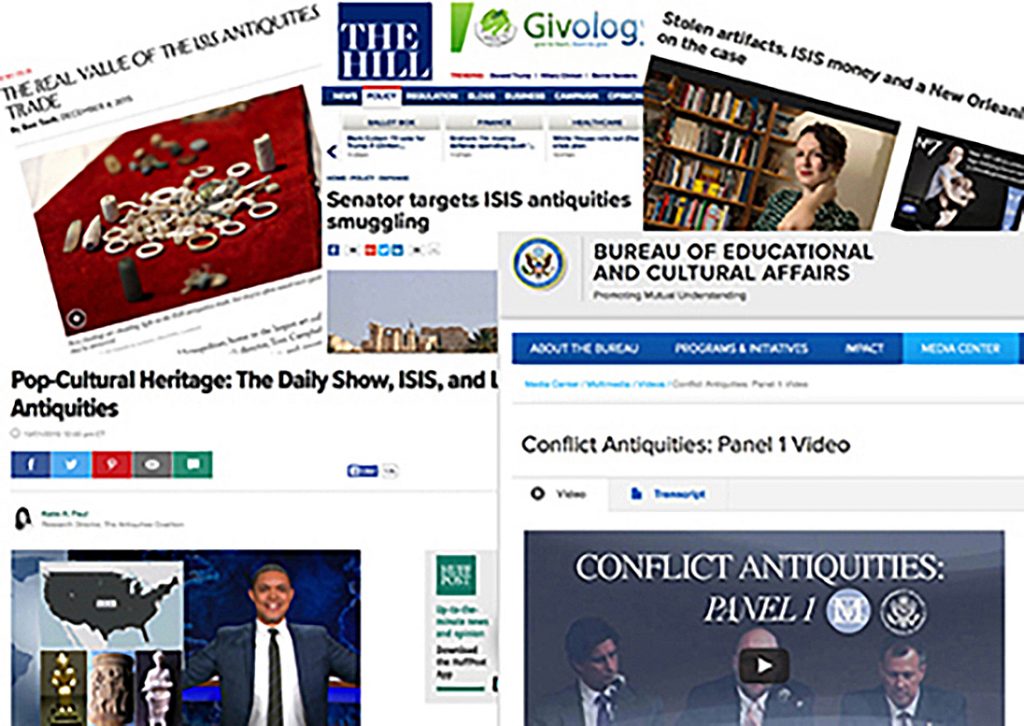
Ivan Macquisten, policy and media adviser to the Antiquities Dealers Association (ADA), speaks on behalf of the ADA at Destruction of Monuments and Memory in the Middle East, a seminar organised by the Iran Heritage Foundation, at Asia House in London on December 16, 2015 (video of speech)
Firstly, I would like to thank you very much indeed for inviting the Antiquities Dealers Association to speak today. I can’t tell you how much we appreciate it, especially as it so rarely happens. In fact, apart from one other conference recently, I have not seen a single instance of a panel, symposium, debate or conference giving the trade a say, so what you have done is really important.
I’m not standing here today with a view to any special pleading for the trade. I am standing here to tell you that what is going on in Iraq and Syria, first from the human perspective and then also from the cultural and historical viewpoint, is as abhorrent to members of the Antiquities Dealers Association and other honest dealers and auctioneers as it is to you and everyone else.
That is why we want to bring our knowledge and expertise to bear in fighting this evil. All we ask of you is that you allow us to do so.
The perception of antiquities dealers as the devil’s disciples is a long misplaced view that even now rears its head as unfounded accusations of dealers funding Daesh appear in the media with depressing regularity – accusations we do not take lightly.
But before we examine what could be behind these ‘blood antiquities’ and billion-dollar headlines, I want to talk about not what separates us but what brings each and everyone one of us here today together.
Principally we share your desire to see Daesh defeated, the peoples of Syria and Iraq given hope, peace and safety, and to make sure that we neither wittingly nor unwittingly contribute to the funding of terrorist activities.
It has been very hard to keep up with the proliferation of conferences and seminars on this subject, as well as all the news stories and newly formed organisations aimed at highlighting real or perceived problems with the antiquities trade.
Nonetheless, we have been monitoring the many and varied claims in the media that looted Syrian and Iraqi antiquities are being traded in London, New York and Western Europe. Aside from the Hobby Lobby investigation now underway, centring on around 200 cuneiform tablets thought to have come out of Iraq illegally, we have yet to see any claim supported by hard evidence.
We all know and understand the vital importance of provenance when it comes to trading in antiquities, but it is also important to apply the same rigour to providing evidence to support claims of wrongdoing.
We need to deal in facts, not propaganda
We are not complacent about the need to be vigilant, nor the need to prevent what looting is taking place, nor how essential it is to prevent trading in trafficked antiquities. However, we need to deal in facts, not propaganda or emotive speculation.
We should be able to rely on what the authorities tell us, but it is difficult when even they do not agree.
Take, for instance, Col. Matthew Bogdanos, whose work protecting the Iraqi National Museum formed the basis of his book Thieves of Baghdad. At a conference held at the Asia Society, New York, on September 24, he told delegates that so much information was classified he had to clear what he said in advance. Giving no source or evidence, presumably as a result of these restrictions, he told the audience, “ISIS is making tens of millions, and I am telling you that this is a low figure that is not exaggerated”.
Just five days later at the Bureau of Educational Affairs Conflict Antiquities symposium, Andrew Keller, US Deputy Assistant Secretary of State for the Bureau of Economic and Business Affairs, said: “The U.S. government assesses that ISIL has probably earned several million dollars from antiquity trafficking since mid-2014. But the actual amount is unknown.”
Meanwhile an October 28 article by Jed Lipinski on Nola.com, the website of the Times-Picayune of New Orleans, profiles Tess Davis, executive director of the Antiquities Coalition, a campaign and lobby organisation described in the article as “a Washington-based nonprofit that unites experts against global antiquities trafficking”. Lipinski writes: “The federal government estimates the group (Daesh) could be making as much as $100 million a year from smuggled artifacts, many of which may already be entering U.S. ports.”
So which is it? Bogdanos’s tens of millions? Keller’s several million since mid-2014 or Lipinski’s $100 million a year?
Maybe it’s none of these. An October 29 article on Washington website thehill.com quotes Senator Robert Casey Jr saying antiquities trafficking from Syria and Iraq is second only to illicit oil sales, which bring in up to $100m a month. He plans to introduce a new bill restricting trade in antiquities further on the strength of this.
Mauro Miedico, Chief of Section, of the Terrorism Prevention Branch of the UN Office of Drugs and Crime, followed Andrew Keller’s speech at the same symposium.
He told the gathering: “In 2011, my office, UNODC, estimated that the proceeds of transnational crime related to art and cultural property amounted to between $3.4 and $6.3 billion yearly.”
This was his office’s estimate, from four years ago, of crime related to the entire global art market, of which antiquities is a minute part. How does that translate to the $3 billion figure we have heard oft quoted as the value of the trade in illicit antiquities?
‘Cosy cabal of academics and others’
Later Col Bogdanos, when asked who is buying the trafficked antiquities, says: “It is a cozy cabal of academics, art historians, dealers, gallery owners, auction houses, museums and private collectors.” However, again he offers no evidence of this.
How many of these people has he prosecuted in his current role of Assistant District Attorney? Surely he could tell us a figure for that, at least? Certainly, the Hobby Lobby case aside, our monitoring of the media has yet to show up a single arrest, let alone a charge or conviction, for a US, British or Western European antiquities dealer on a charge of trading in antiquities looted from Syria or Iraq since Daesh invaded.
Perhaps Katie Paul could point the way. She is Research Director for the Antiquities Coalition and stated in her October 1 Huffington Post article: “…The American antiquities market is funding the very terror group the US government is seeking to eradicate.” I assume she has evidence of this, although, again, the article offers none.
Nor does Senator Casey, who, despite telling Washington’s thehill.com that the looted antiquities trade is second only to the up to $100m a month illicit oil trade, does not know of any specific cases of U.S. citizens who have bought stolen artifacts from ISIS, but, “wouldn’t be surprised if it is happening”.
I do not quote all of the above to be facetious, but to illustrate a fraction of the issue we are dealing with and why claims in the media need challenging if they are presented without source evidence.
If US Government representatives speaking at conferences within days of each other cannot agree on the figures, we have a serious problem.
Another US Government representative, Robert Hartung from the Bureau of Diplomatic Security, also at the Conflict Antiquities symposium, announced the “Rewards for Justice” programme would offer up to $5 million for information leading to the disruption of antiquities sales that benefit Daesh. What he didn’t say was that the programme applies to oil smuggling as well and this accounts for hundreds of millions of dollars of Daesh revenue. Has the $5 million been awarded yet? (See page 9 of 17 of video transcript)
So far I have highlighted the lack of evidence put forward together with a series of conflicting statistics when it comes to the value of looted and trafficked antiquities.
Now let’s look at what evidence does exist and where it comes from.
The 2015 TEFAF Art Market Report, produced by Arts Economics, shows the entire 2014 global Art & Antiques market reached €51 billion. (See page 15, Key Findings)
Legitimate global Syrian antiquities market worth around €20m
Current research undertaken by IADAA (the International Association of Dealers in Ancient Art) into the legitimate global trade in antiquities estimates its value at between €150 million and €200 million, so 0.4% of the global Art & Antiques market. How much of that is Syrian antiquities? Probably around 5-10%. That would be around €20 million at most. (See James Ede, ‘Dealers: Trade, Traffic and the Consequences of Demonisation’, IADAA, Articles of IADAA Members)
Commonsense tells us that the illicit trade will be smaller than this figure, so this is what we are likely to be dealing with in reality. Nothing to get complacent about but nowhere near the tens or hundreds of millions of dollars being quoted.
All sides in the debate agree that a very significant source of evidence resulted from a US Special Forces raid in Syria in May. Andrew Keller revealed this during his speech, referred to above.
The raid, at the home of Abu Sayyaf, a high-ranking Daesh officer, recovered receipts from his six-month tenure as head of Daesh’s antiquities division.
These showed that he collected at least $265,000 in taxes for antiquities – known to be charged at a rate of 20% – which would equate to an antiquities trade of about $1.3 million for a few months, perhaps amounting to $4 million over the course of a year.
Importantly, Neil Brodie, Senior Research Fellow in the Scottish Centre for Crime and Justice Research at the University of Glasgow, and highly active for decades as a campaigner for more trade restrictions, has subjected these findings to analysis in his recent article for the European Union National Institutes for Culture.
Brodie analyses the receipts and confirms the $4 million figure, although there is some confusion as to whether the receipts also encompass minerals. Certainly, Brodie notes, this “would pay for a lot of antiquities, yet very few have been identified on the destination market”.
Ben Taub, a journalist, has dug a little deeper, having some of the Arabic on the receipts that had not been made public by the US State department translated by Bernard Haykel, a professor of Near Eastern Studies at Princeton and an expert on Daesh. He says its is unambiguous; these documents urge the excavation teams to extract not only antiquities but also metals and minerals. So, what does this
$4 million figure refer to?
Brodie also notes that the more “archaeologically-rich” western areas of Syria remain under the control of forces loyal to Assad, and points to a further source of evidence showing that antiquities provide just 0.8% of Daesh’s income, which “accords well with the US Department of the Treasury’s seemingly low estimation of the antiquities trade’s financial importance”.
‘Archaeology community’s strategy risks inappropriate response’
Brodie goes on to argue that “There is an opinion within the archaeological community that highlighting the financial importance to ISIL of the antiquities trade will make it an issue of national security and ensure a strong government response. The danger with this line of reasoning is that the response might be inappropriate.” The ADA endorses this view. But it suits the agenda of those who are keen on dismantling the antiquities trade.
He echoes Keller in calling for effective strategies to eliminate demand.
If he means demand for looted and trafficked antiquities, the ADA backs him all the way.
Objects may be appearing in countries bordering Syria, principally Turkey and the Lebanon, as well as on social media; in all probability ending up with those who are not part of the known and traditional market. Why do we suspect this? Because we are not seeing anything on the market here in London.
There is a great deal of work to be done to identify exactly where looted material is going, but it is clearly not going to the traditional and established market. The types of objects – beads, coins, pottery – that we have all seen photos of are generally of very poor quality or fake and are of a type that have been on the market for many decades and in any event wouldn’t go very far in funding the rent on a London flat let alone the world’s most notorious terrorist organisation.
Of course the repeated quoting of enormous and patently absurd values of looted antiquities apparently being sold in Europe and elsewhere is only going to fuel further illegal activity in the Middle East and for this reason, alone, the media – and those prompting journalists – need to behave responsibly.
So what are we in the trade doing to make sure we do not handle illicit antiquities?
Our trade associations have actively collaborated with Government in this country to address these issues and will continue to do so. The ADA, for instance, has completely rewritten its Code of Conduct, with mechanisms in place should a member be found in contravention of the Code.
We intend to encourage non-trade association members to embrace the tenets of our Code of conduct and will work hard to ensure that all those who deal in antiquities in this country remain vigilant. You will be able to read the Code in full when we relaunch our website in 2016, as well as much else to improve transparency, clarity and due diligence, such as the links to Red Lists.
And we are also working closely with Law Enforcement, including Scotland Yard’s Art & Antiques Squad, academics and Members of Parliament to ensure that we are part of the ongoing debate. Our involvement is absolutely essential.
Clear provenance carries a premium
No other area of the international art market now prizes provenance more than we do. Best of all, clear provenance now carries a premium at auction, encouraging all concerned to establish it as often as possible.
If objects are being offered well below market value, especially by people you do not know, alarm bells should ring.
However, we too rely on information and this is rarely forthcoming from source countries. This may be for a number of reasons but this cannot continue if we are to be effective.
The trade’s critics are a little too fond of using the Becchina and Medici archives to beat us over the head with. Give us access to them and we will happily ensure they form a major part of all due diligence.
What is needed is not breast-beating and demonisation of the trade, but new and accurate data that provides better grounds for response.
As Neil Brodie warns, the response to the Syrian crisis must not be inappropriate.
It is for governments and international organisations to source this information and to pass it on to those on the ground, including law enforcement, museums and the trade. But this information must be based on facts and not spin or speculation. Only then can we assess what is actually occurring and make sure we are able to halt or reduce smuggling on the borders of these countries.
So how can we in the trade help?
There is no doubt that amidst the destruction, illicit material is being squirrelled away, as has been suggested. This really worries us… as this material will necessarily surface on the open market sooner or later. This could be some years from now.
The challenge for us is to make sure we have the correct mechanisms in place to prevent the legitimate trade from handling illicit material and, where possible, identify it and return it if and when it does appear. It is clear that the help of the trade is going to be vital in confronting this problem and it will require a long-term collaboration.
We must find ways to protect archaeological sites.
In this country there must be an effective system of communication between all parties concerned. What we are finding is that there are press leaks to different individuals with different agendas. What we do need to recognise is that in order to make sure London remains ‘clean’, there is a clear alert system to all of us who are involved from law enforcement, Customs, counter terrorism and academia to the trade. Problems cannot be resolved via the media and press briefings.
We must also find a solution for those antiquities currently circulating in the market, a line drawn in the sand that gives those objects an amnesty so they can be traded freely. It will make managing the future of antiquities a more achievable goal. If you want to suppress the illicit market, it is imperative to support the legitimate market and to encourage transparency as opposed to fear.
Those critics of the trade who find themselves unable to work with us should perhaps ask themselves if this attitude is really in the greater interest. It should be clear to all who have been following recent events who your enemy really is… and it really isn’t us. We are part of the solution and not the problem.
by Antiquities Dealers' Association | Jun 7, 2016 | Views |
We have talked today a lot about looting and have seen many illustrations, but it is clear that the greatest crisis currently facing world heritage is the destruction taking place in Syria and Iraq. The major causes of the destruction are two-fold: war with indiscriminate shelling and bombing and deliberate destruction of monuments by fanatics in the name of their religion.
Looting comes a poor third. Recent lurid headlines have suggested that the funding of ISIS through the sale of illicitly excavated antiquities is the foremost problem. Clearly it is not. Wild speculation that tens of millions, even sometimes billions of pounds worth of antiquities are entering the market from Syria is common. No-one with any knowledge of the market could give a moment’s credence to such ideas.
Although we have no doubt that amidst the destruction there is a lot of clandestine excavation taking place, there is no evidence to date of any significant material surfacing on the market. In any event, the licit market is small and the vast majority of antiquities have relatively modest value. Best estimates show that the global annual turnover for all classical and pre-classical antiquities is less than €200m per annum. The proportion of that consisting of objects from Syria is a small fraction, probably less than 10%. The illicit market must necessarily be smaller than that. As an ex-soldier I can attest that these sums of money don’t buy many arms.
At this point I need to emphasise the difference between the licit trade and illegal traffic. The licit antiquities trade has no interest in the illegal traffic in stolen antiquities. The preservation of our ancient heritage is as vital to us as it is to anyone else here. The fact that we come from a different perspective does not mean that our reverence for world cultural heritage is any less real than yours. Indeed, at its best, the trade is a positive force, devoting large resources to conservation and research. The earliest roots of archaeology start with collectors; the first museum were founded by collectors. It is the job of museums to collect and conserve for the benefit of the public. This is impossible without a trade.
The trade has not always had a good record in the past in dealing with smuggled material, but things have changed dramatically in the last 10 to 15 years and continue to do so. Our trade associations have actively collaborated with Government in this country to address these issues. I also acknowledge that much of this change has been driven by our critics. Yet they should also acknowledge that in recent years we have made huge strides; no other area of the art market now prizes provenance more than we do. The proof of this lies in the high price at auction fetched by those objects with fine demonstrable ownership history. But we too rely on information and this is rarely forthcoming from source countries, sometimes through a misplaced sense of pride, sometimes because of corruption, sometimes because of lassitude. Even close to home we are deliberately denied access to information – the so-called Becchina archive (named after a man who has not even been convicted) is jealously guarded, and morsels of information drip fed. How on earth are we supposed to conduct our necessary due diligence in the face of this attitude?
The Future
The present question for all of us is ‘how much can be salvaged from these wars and by what means?’
What is needed is not breast-beating and demonisation of the trade, but new and accurate data that provides better grounds for answering these questions. It is for governments and international organisations to source this information and to pass it on to those on the ground, including law enforcement, museums and the trade. But this information must be based on facts and not speculation. Only then can we halt or reduce smuggling on the borders of these countries. Perhaps the attention should be targeted on the countries directly bordering the conflict zones.
So how can we in the trade help?
There is no doubt that amidst the destruction, illicit material is being squirrelled away. This really worries us as this material will necessarily surface on the open market sooner or later. This could be some years from now. The challenge therefore is to identify it and, where possible, to return it when it is safe to do so. It is clear that the help of the trade is going to be vital in confronting this problem and it will require a long-term collaboration. Those critics of the trade who find themselves unable to work with us should perhaps ask themselves if this attitude is really in the greater interest. It should be clear to you following recent events who your enemy really is; it isn’t us.
The key to the problem lies in information. The technology now exists to record objects cheaply, and we would suggest that UNESCO should provide the support to allow vulnerable museums, and in particular off-site storage facilities, to photograph all their holdings. Once an object is recorded, the chances of recovery improve to an enormous extent. The same applies to above-ground archaeological sites. This is of course no help in the case of clandestine excavation, but it is a start.
This issue can also be tackled from another direction. My trade Association is working on a project which is intended to record objects which are on the market, in perpetuity. This is intended to build up a database of those objects which can be legally traded while providing an opportunity for potential claimants to identify those which are stolen. This is a huge demonstration of good faith. It will also make life much more difficult for those who deal illegally.
We are prepared and willing to play our part. It is a vital one. If you want to suppress the black market, support the white.
Finally, I have to say that the best way of curtailing this mayhem would be by returning the region to peace. At least we dealers cannot be blamed for the war: that is something our governments have to think about.
When I think of Nimrud, I feel like weeping. I have never been there and now never will. I have saved the last 15 seconds of my allotted time for a moment of silence. RIP Nimrud.
James Ede
Speech at the Culture In Crisis Conference
The V&A
April 2015
London Conference on Culture in Crisis
London Declaration on Culture in Crisis
by Antiquities Dealers' Association | May 9, 2016 | Views |
There are many antique shops and dealers in antiques throughout the country. Often they belong to the British Antique Dealers’ Association (BADA) or to the London and Provincial Antiques Dealers’ Association (LAPADA); there are also more focused local groups, such as the Cotswolds Antique Dealers’ Association, etc. It is not so easy, however, to find dealers in antiquities. Antiquities call for a high degree of specialist approach and, whilst many people would love to own an antiquity, they are often cautious of buying by virtue of their own lack of knowledge or knowing where to go for what they want.
It is not often realised that just because an object may be centuries, or even several thousand years old, it does not have to be financially inaccessible. The relics of past civilisations are still generally available, subject of course to the laws governing their export, which have been introduced in many of the modern countries that were once the home of ancient civilisations. Despite these restrictions there is an ample supply of objects from older collections that are always being broken up and dispersed, usually through auction houses.
What to buy or collect is one of the big questions facing anyone who wants, literally, to handle the past as represented by its material culture, be it a stone sculpture, small bronzes, jewellery or simply small domestic items like everyday pottery or personal things such as a Roman toilet set with tweezers, cuticle pushers, and so on.
Most people come to antiquities through reading books on ancient history or archaeology. It is quite easy to acquire, for example, a decorative Greek vase made in the Greek colonies of South Italy in the later fourth century BC, around the time that Alexander the Great was pushing eastwards against the Persian empire, carving his way into history and legend. Roman or Palestinian pots and pottery oil lamps made in the early years of the Christian era do not have to cost the proverbial “arm and a leg” and earlier, really attractively shaped and complete pots from Palestine of Old Testament times are easily available at well under £100 a piece.
Enormous range of prices
Obviously, the prices of antiquities cover an enormous range, depending on what the item is. The great Roman silver “Sevso” treasure of 14 silver vessels that was in the news in recent years has been valued as a collection at around £40 million, but that is at the extreme of the available market. Large bronze “crossbow” brooches (fibulae) of that same Late Roman Period, worn like a modern safety pin to secure a cloak or other clothing, can range in price upwards from £30 or so whilst larger, fine examples, naturally command more money, in the region of £200 to £300 each. The point about collecting antiquities is that they provide the opportunity to reach back across the centuries and actually handle the past to, if you like, feel a rapport with the original ancient owner. There is tremendous scope for individual taste in collecting and, not least, for research.
Many “amateur” collectors have made a particular area their very own by detailed study as they have built up their collections. Their knowledge will often surpass that of a curator in a museum, who invariably has to take a broader view, or of the dealer who supplied the items. Buying antiquities, like antiques, tends to be a personal thing. Collectors get to know dealers who stock the items that interest them, and not least, the dealer gets to know his client’s requirements and keeps an eye on the market for available pieces. The dealer will often get as much pleasure in securing items for a collector, helping and watching the collection grow, as does his client – and they both enjoy and learn from the contact.
Most of the antiquities dealers in the UK belong to the Antiquities Dealers’ Association (ADA), and also quite a number of foreign dealers as Corresponding Associate Members. By membership the dealers keep in touch, broaden their own expertise and can collectively act under the Code of Conduct of the ADA, guaranteeing all the objects they sell to the best of their professional knowledge and expertise to be as they are described and of the date stated.
Peter A Clayton
Treasurer
The Antiquities Dealers’ Association

Recent Comments