by ADA | Mar 31, 2025 | News, Uncategorized |
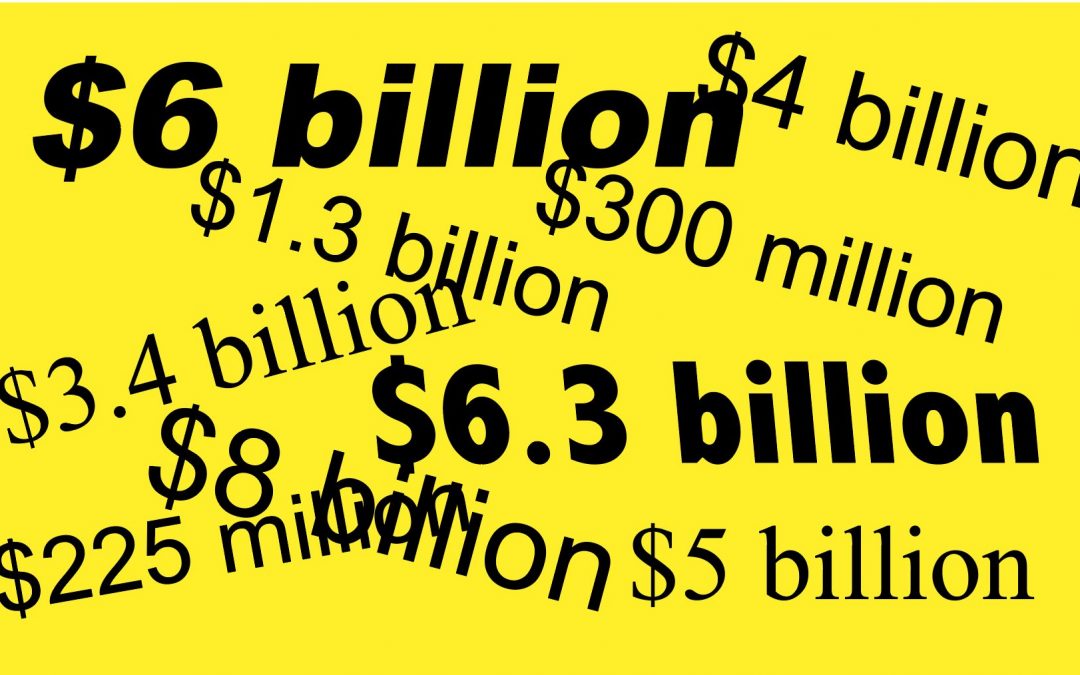
Despite myriad figures for illicit trade worth billions or even tens of billions of dollars, no one can point to any reliable source for claims
A survey of a dozen of the world’s top law enforcement agencies and government departments has revealed that none of them appears to have any accurate data regarding the value of cultural goods trafficking globally.
This is despite multiple claims going back years of an illicit trade worth tens of billions of dollars.
Indeed, in at least one case – Interpol – the only reference to the size of the problem comes in a ten-year-old video still prominent on its website, in which former Secretary General Jürgen Stock makes the claim that the black market in art is as lucrative as the illicit markets in drugs, weapons and counterfeit goods – a claim long since exposed as untrue.
Carried out on behalf of several art market trade associations, the survey sought responses from the European Commission, the EU Directorate for Culture, the European Anti-Fraud Office (OLAF), the US State Department, Interpol, Europol, the FBI, Homeland Security, the Financial Action Task Force, the UK’s National Crime Agency, the World Customs Organisation and UNESCO.
Care was made to approach the correct source for such information in each case, and follow-up requests were made when advised by the relevant authority of a different source.
The aim was to get a clear picture of trafficking levels
The aim of the survey was to establish a clear picture of global trafficking data for cultural property.
“It is important to establish credible data to defeat the extensive misinformation and disinformation surrounding this subject, which plays a significant part in hampering effective policy making,” the authorities were told.
Each was asked the following: “Do you have any independently verifiable figures relating to the value of trafficking of cultural property, especially any global figures for the annual value of this risk area?”
And each was asked to supply the data and its sources if it was available. Not one did. More than one admitted that it didn’t have the information or that it simply did not exist. These included organisations producing extensive reports claiming cultural goods trafficking is a huge problem.
Others either did not respond or directed the request to another source. In one case, the UK’s National Crime Agency, the request was met with refusal to respond on the grounds that it was not a public body.
No relevant data from Interpol or Europol
Despite mass data being made available for associated issues and other categories of risk via the World Customs Organisation annual Illicit Trade Reports, together with arrests and seizure data from Interpol and Europol via Operations such Pandora, not one authority was able to provide any credible data on the size of cultural goods trafficking.
Having previously stated on its website that it had no data showing the size of the problem and adding that it never expected to have any reliable data on global trafficking in cultural property, Interpol says it is a “lucrative black market” and introduces its Cultural Heritage Crime section as follows: “Trafficking in cultural property is a low-risk, high-profit business for criminals with links to organized crime. From stolen artwork to historical artefacts, this crime can affect all countries, either as origin, transit or destinations.”
Requests to both Europol and the World Customs Organisation have proved equally fruitless.
Europol directed the request to its website, which gives no such data. However, it had responded to an earlier request, stating: “We do not have these figures. Europol is not a statistical organisation – Europol’s priority is to support cross-border investigations and the information available is solely based on investigations supported by Europol.”
Europol has since confirmed that it does not have the relevant data.
When emailed in February, asking why it no longer included any relevant data in its annual Illicit Trade Report on Cultural Goods, The WCO explained that global data on illicit trade “does not exist”.
When emailed again in March, it did not respond.
No relevant data available from Eurostat
The European Commission’s information service directed the request to Eurostat, but that does not have any relevant data.
The Financial Action Task Force directed the request to its 2023 report: Money Laundering and terrorist Financing in the Art and Antiquities Market. However, much of that report is based on historically inaccurate data and provides no credible figures for global trafficking at all. It also acknowledges that it does not have the data, stating on page 28: “The lack of reliable statistics concerning looting activities, especially from conflict zones, makes it difficult to assess the scale of the phenomenon. However, taking into account the volume of looted archaeological goods seized in certain international or national police operations, it appears that this is a large-scale activity.” This view does not tally with the global data published by the World Customs Organisation.
The US State Department directed the request to the Office of Civilian Security, Democracy, and Human Rights, providing two phone numbers. One had a voicemail, so a request was left for an email address, with no result; the other number did not work. The weblink provided by the State department gave no information on the ‘Office’. Extensive web searching came up with no contact details. No further response came.
A March 12 response from the FBI referred the request to an online request form, which was filled in the same day. To date, no further response has arisen.
No relevant data from the European Anti-Fraud Office
A follow-up request elicited a response from the European Anti-Fraud Office (OLAF). It welcomed the attempt to gather credible data but said its work did not relate directly to doing so itself.
No responses came at all from the Directorate-General for Education, Youth, Sport and Culture (DG EAC) (Cultural Heritage Unit); UNESCO’s Information Service (for all UNESCO data); or Homeland Security.
Readers will have their own views as to what this means, but the complete lack of any reliable data – or any data at all in most cases – raises the question as to what the unending slew of claims over global trafficking in cultural property are really based on.
A more detailed summary of individual responses is available.
- This article will be updated by any further responses of note.

by ADA | Feb 25, 2025 | Views |
The World Customs Organisation (WCO) finally seems to have all but given up when it comes to an accurate and detailed analysis of trafficking and the art market, if its 2022 and 2023 Illicit Trade Reports are anything to go by. Several wild claims of trafficking worth billions when it comes to Cultural Goods are not only unsupported by evidence or any reliable sources – they even contradict each other.
Added to this is the WCO’s insistence on the art market being a haven for money laundering while quoting reports that say the opposite. Even its most important anti-money laundering initiative, Project Tentacle, demonstrates that the art market has little to do with what is going in this sphere of crime.
Most intriguing of all is that while it claims a 15% uptick in Cultural Goods trafficking in 2023, it produces no statistics whatsoever to demonstrate this. Also, unusually, no graphs, graphics or tables are included to demonstrate the problem despite many appearing for every other risk category covered in the 250-page plus report.
Almost a data-free zone
When it comes to Cultural Goods, the report is almost a data-free zone.
As the introduction on page 11 tells us, data for the 2023 WCO report comes chiefly from the Customs Enforcement Network (CEN), but this is supplemented by other sources: official government media outlets; international organisations; member surveys and open-source analysis. While these might be helpful, they also increase the risk of misinformation and propaganda. As the Antiquities Forum has discovered on numerous occasions, official reports are not necessarily robust when it comes to the reliability of their data.
Seizures under Project Tentacle, carried out in partnership with Interpol and the Financial Intelligence Units across multiple countries, amounted to $22 million worth of gemstones, currency and precious metals in 2023. The WCO details seizures in this area as follows:
Gold: 116 seizures – 266.3 kilos of golds bars, 153 gold coins and 122 pieces of jewellery
Currency: 153 seizures – US$3.36 million
Wildlife: 1 seizure – 69 Toucans and Macaws
Trade-Based Money Laundering: 1 case connected to high-duty consumer goods and alcohol
Watches: 29 including 4 Rolexes
Meanwhile, Ukraine understandably dominates reporting when it comes to Cultural Goods trafficking.
Of all the statistics published, the WCO’s priority list is perhaps the most interesting. It categorises each of the 11 risk categories for its priority status among WCO members: Essential, High, Moderate, Neutral, Somewhat, Low and Not a Priority. It presents an average priority score for each category, the highest being 5.06 for drugs, and the lowest 3.41 for Cultural Goods.
Despite this, the WCO claims that the annual global value of trafficked cultural goods is in the tens of billions of euros. It gives no source for this but seems to be confusing the figure with the value of the legitimate global art market in 2023, which it puts at $65 billion, using the Art Basel Report as a source.
The tens of billions claim also clashes with another claim, which reiterates the long debunked figure of $6 billion reported in the 2016 UNODC report as the value of the global “underground market” in cultural goods.
“As we will see below, the market has naturally attracted criminals, organized crime groups, and terrorists who seek to launder proceeds of crime and fund their activities,” the introduction to this section states – a claim not held up by what follows at all, especially as it immediately excuses the “low figures” for seized Cultural Goods as under reporting by WCO members as they have other priorities. The report says that although reported seizures of Cultural Goods are low, they have been “consistently trending upwards since 2019”, with a 15% increase year on year in 2023. What the actual figures are, we are not told.
The WCO quotes the IMF and the Financial Action Task Force (FATF February 2023 report) in damning the art market as a higher risk sector for money laundering than other sectors, even though studies such as the US Treasury Report of 2022 concluded it to be lower risk. The FATF report, a seriously flawed and heavily redacted piece of work, largely used case studies that, while involving art, did not involve the art market. In fact, the FATF report acknowledged that the art market was not attractive to money launderers, is regulated by AML laws as well as self-imposed compliance and “In addition, a large part of the transactions carried out in the sector are routed through the banking system, which generally has mature and long-standing AML/CFT controls.”
Ramping up the anti-market rhetoric
The WCO ramps up the rhetoric against the art market by quoting the case of Lebanon-based Nazem Said Ahmad, a man with suspected linked to Hezbollah, whose property was seized from storage near Heathrow in London in 2019 and became the subject of a major investigation. The WCO puts a value of $160 million on the seizures although the figure reported at the time was $1.3 million. How much this case had to do with the art market is unclear. Certainly at least one auction house, Phillips, was involved, but had frozen Ahmad’s artworks and banned him from doing business with them in 2019. The WCO does not name the nine co-conspirators who were charged in 2023, nor whether any of them were part of the art market.
In none of the limited number of cases of cultural goods trafficked from Ukraine mentioned in this report does the WCO mention any links to the art market.
This 2023 WCO Illicit Trade Report comes across as little more than a piece of anti-market propaganda. The failure to publish any hard statistics other than those that are wrong or have no source displays a degree of cynicism, while conflicting bogus claims as to the size of trafficking – $6 billion or tens of billions of dollars – show a lack of care or incompetence that simply undermines the WCO’s credibility.
Yet again, we are faced with an authority that appears to have a pre-set political agenda when it comes to the art market, making claims it cannot support with evidence, then acknowledging that the evidence isn’t there, then excusing this shortcoming by blaming ‘under reporting’. As figures from previous years have shown – and the pie charts of 2019 figures shown above demonstrate – by a very long way Cultural Goods make up the smallest contribution to trafficking by every measure. This is not just true for the number of cases and seizures, but also for the volume and value of items seized of any risk category. In the decade or so since such figures have been reported, this has always been the case, and this fact is supported by every other study published into the subject.
We have written to the WCO asking for the source of its figures and challenging its position on Cultural Goods, and it has informed us that the officer in charge of drafting this section of the illicit trade report no longer works for the WCO. The WCO also says that as the CEN is built for analysts, not statistics, the global data on illicit trade does not exist. If so, how can the WCO quote figures of “tens of billions of dollars” or “$6 billion”? And what about the 15% uptick claimed? This is clearly no more than gossip or guesswork, neither of which has any place in such a potentially influential report. We have now asked the WCO not publish data without giving its primary source, and for them to check that source to ensure it is accurate.

by ADA | Sep 9, 2024 | Uncategorized, Views
If you want to get an idea of how enforcement might work under the European Union’s new import licensing regulation after June 28, 2025, here is a cautionary tale.
Earlier this year, a dealer in Paris bought two fairly inexpensive canopic jars from their California-based owner, whose great grandfather – a friend of the celebrated Egyptologist and finder of the tomb of Tutankhamun, Howard Carter – had had them in his possession for many years.
The jars were despatched to the dealer in Paris at the beginning of May. The dealer was soon notified of their arrival in Paris, but they never made it as far as the gallery.
It turned out that they had been held by Customs for inspection, and the dealer duly offered Customs all the paperwork they had for them. The Customs officials did not require the paperwork, wanting only proof of purchase, which was duly supplied. They continued their inspection and checks, which included contacting the Egyptian authorities to see whether the jars had been listed as stolen or illegally exported.
After two months, satisfied that jars had been legally sold and imported to France, Customs released them back to the courier service, but again they never arrived.
Having heard nothing, at the end of July the dealer contacted the courier service to find out what was going on, only to be told that they would soon be delivered but that delays were due to the shipping agent being on holiday.
Knowing that they were about to leave on holiday, the dealer advised the courier service that they should ensure the packages be delivered no later than August 4. Although reassured that this would happen, they did not arrive by the deadline.
Service proves ‘undeliverable’
When the dealer checked again with the courier service, they said that they had attempted to deliver them but the address was wrong. The dealer then confirmed the delivery address but asked for the packages to be held until their arrival back from holiday at the end of August, a request registered with the tracking service. Despite this, three further attempts were made to deliver the packages without any effort to try to contact the dealer, and the packages ended up back in storage. On August 20, the shipping company deemed the packages ‘undeliverable’ and decided to send them back to the USA.
By coincidence, a shipping agent at the airport in Paris who had been involved in the earlier Customs checks had spotted the packages being returned and stopped them, contacting the dealer by email on September 2 to let them know, and confirming that they would be returned to the courier service once more for delivery the following day.
Again, the dealer heard no more and the packages never arrived.
Contacting the courier service once more, they learned that the packages had been dispatched to the airport again for return to the USA.
This time the dealer emailed the same shipping agent, who said that they would try to get them off the plane, later confirming that they had managed to do so. Refusing to leave anything further to chance, the dealer then went to the airport to pick up the packages in person but found that one was missing. They were told it had probably already been sent back to the USA. On inspecting the other package, they found that Customs had not repacked it properly and its contents were broken.
So despite clearance from Customs after inspection and contact with the Egyptian authorities, one package has now been returned to the USA where, according to the US Memorandum of Understanding with Egypt, it risks being seized at Customs and sent back to Egypt, while the other has been mishandled and, far from being protected under the Customs process, has instead been destroyed.
This is just one example of the problems faced by art market professionals when importing to the European Union. What will it be like after June 28, 2025, when Customs will have to check a vast number of additional packages it has not had to deal with before?

by ADA | Jun 27, 2024 | News
On June 25, The Chalke Valley History Festival played host to a BBC seminar on the thefts from the British Museum. BBC Culture Editor Katies Razzall and her team of investigators shared a platform with whistleblower Dr Ittai Gradel in front of a packed audience as they told the tale of how the thefts came to light and Dr Gradel’s pivotal role in exposing them.
The audience listened spellbound as, accompanied by slides and excerpts from the current BBC documentary series on the issue, the panel unfolded the course of events over a 15-year period.
Dr Gradel started by explaining his background and interest, and the nature of the gems involved, detailing their historical importance and variety, before setting out how his suspicions first arose about the eBay seller from whom he had been acquiring items since 2015.
The turning point came when he spotted direct evidence in the form of flaws in one gem that matched those in the records of the British Museum collection. The thief had largely sold off items that had gone unrecorded but slipped up after years of getting away with it, he added.
The BBC team of investigators told how they had tracked buyers down to the United States and Germany, where one journalist, Darin Graham, found what was arguably the most important missing gem in a public exhibition.
The audience treated Dr Gradel as a hero, especially after learning about the difficulties he had faced trying to get the British Museum management to take his alerts seriously. They were equally clear about how important they considered the museum to be as a British institution.
The BBC has now released a podcast series, Shadow World, currently a series of ten episodes covering the scandal and how it unfolded. It is freely available to listeners.

by ADA | Jun 14, 2024 | News
Leading art market lawyer says new regulation will risk isolating the EU culturally
British trade associations concerned about impending EU legislation that will affect UK exports will brief dealers on the changes at a seminar in London on June 28.
Titled The increasing difficulty in the international movement of ancient coins and objects, the afternoon session is organised by law firm Devonshires, who will host the event at their London offices and online on behalf of the British Numismatic Trade Association and the Antiquities Dealers’ Association.
The session will focus on how to comply with the news EU import licensing regulation (2019/880), which comes fully into force on June 28, 2025, and affects art and objects created and originally discovered outside the EU.
Provenance, due diligence and paperwork are at the heart of concerns as the trade associations argue that the regulation will make it all but impossible to meet its demands.
Of particular concern is the manner in which the regulation reverses the burden of proof for importers to the EU. Instead of the authorities having to show that imported items have been stolen or illegally moved, it will be up to the importers to show that they haven’t.
Martin Wilson, co-chair of the newly formed Art Lawyers’ Association, summed up the challenges in an article published on June 13 titled The New EU Cultural Goods Import Law – Politics over Pragmatism?
Wilson, who is also Chief Legal Officer at Phillips Auctioneers and author of Art Law and the Business of Art, argues that the law is unlikely to prevent the trafficking of cultural property, one of its chief aims: “…the best-case scenario is that trafficking activities will simply be diverted to elsewhere in the world by this law, not stopped,” he writes. Worse, while the legitimate market will face the burden of compliance, traffickers will simply ignore the law, he believes.
“There is a risk that the more difficult it is to import an object legitimately the greater the incentive to resort to smuggling and the greater the rewards for doing so. If that happens trafficking activities will be neither stopped nor diverted – and may even increase,” Wilson warns.
It is also apparent that the EU authorities have significantly underestimated the challenge of establishing an effective electronic registration system for imports – “a mammoth task”, says Wilson – while customs officials are unlikely to have the relevant experience or expertise to deal with applications. The expected clampdown likely to result from this means will mean significant delays, inconsistency in rulings and unjustified refusals, he says.
Wilson concludes: “This complexity and delay – as well as the likely inconsistency of decisions – will likely be a strong disincentive to import art of any kind or origin into the EU. This will lead to fewer imports into the EU of art and fewer EU buyers of art in countries outside the EU. By making it harder to import cultural property, the EU will then risk becoming culturally isolated.”
This is the context in which the June 28 seminar will be conducted.It runs from 3pm to 5.30pm BST, with networking drinks to follow. Those interested in attending in person or remotely can find all the details here.
Recent Comments