by ADA | Jul 1, 2020 | Uncategorized, Views |
The secretary general of the largest trade federation for art and antiques dealers hits back at what she regards as “zombie statistics.”
When the entire German art and antiques trade is at stake, it is important to get the facts right.
A recent study into the illicit trade of antiquities has recommended that the German government clamp down even harder on the beleaguered German art market. But shockingly, the study’s conclusions are based more on suspicion and prejudice than scientific research.
Amid concern that Germany was a hub for international cultural property crimes, the country’s Federal Ministry of Research began the ILLICID study in April 2015. The €1.2 million project was carried out over three years. The resulting 50-page report, published last month, identified no trafficked items or any evidence whatsoever that the sale of antiquities helped finance terrorism.
But, I would argue, the German ministry that commissioned it has manipulated the results to support an anti-trade agenda. As the secretary general of CINOA, the largest trade federation for art and antiques dealers, who has been campaigning on their behalf in the European Union and elsewhere for years, I have seen firsthand how statistics can be manipulated to suit political agendas and are often accepted without being checked.
Not a Multi-Billion-Dollar Business
Before we get into the specific flaws of the report, it is important to acknowledge that even its motivation is built on a false premise. Over the years, there have been repeated claims from officials that the illicit trade in antiquities is a multi-billion-dollar industry. But after much debate, trade and anti-trade campaigners alike have concluded that these estimates are not only unfounded, but clearly wrong, and part of the trend now dubbed “zombie statistics”—that is, pieces of information that are frequently cited by experts and institutions, despite having no basis in research or reality.
There have been various attempts to trace where this mistaken belief about the value of the illicit trade in antiquities originated, and sources invariably lead back to several media reports from the early ’90s that cited it as a “belief” held by some experts—but gave no evidence to support that belief.
The authors of the ILLICID report weren’t the only ones taken in by faulty reasoning, which leads to faulty counting. The international criminal police organization, Interpol, removed similar claims from its website just last year, acknowledging the lack of evidence to support them—but not before they had informed some European policies.
So what numbers can we count on? The FBI valued all cultural property crime at around $4 billion in 2013, including crimes relating to everything from contemporary art to antique furniture. This figure was largely made up of domestic burglary and crimes such as fraud and vandalism.
The most reliable figures relating specifically to illicit trade currently available come from the World Customs Organization, whose latest Illicit Trade Report, published in December 2019 and covering 2018, stated that cultural property (including all art and antiques, not just antiquities) accounted for 0.08 percent of trafficking seizures reported through its network. In 2018, a total of 314 trafficked archaeological items were seized globally and reported via the network, down from 703 in 2017.
Unrealizable Provenance Requirements
The ILLICID report examined more than 300,000 items and valued the objects it studied (note: not illegal objects, but all objects) in Germany at around €850,000 per year for the course of the study. A lack of access to criminal evidence means that the report does not even mention illegal excavations, looting, or terrorist financing.
The authors identified a total of four suspicious transactions, but concluded that “potential money-laundering cannot be excluded, however neither is it inevitable.” In one of these cases, it appears that the object in question was a “sleeper,” as in, a misattributed masterpiece whose true significance was simply not recognized by the German auction house that catalogued it.
But perhaps the most sensational figure, widely repeated in media headlines, was that around 98 percent of Eastern Mediterranean antiquities sold in Germany were of questionable origin. This, however, is a skewed interpretation of the facts.
Fewer than two percent of the items studied—a total of 6,133 objects—“potentially” came from regions of interest around the Middle East, and it was 98 percent of that slice deemed to be of questionable origin. So the conclusion might be more accurately framed as: just under 0.02 percent of all of the items studied are of “questionable origin.”
The suspicion about origin is largely based on what the researchers see as incomplete provenance history, including the absence of previous owners’ names, despite the fact that data protection rules prevent this in many cases. The absence of full documentation for antiquities that have been circulating in the market for years is not only commonplace, but the norm.
Countries of origin often had no export licensing system when items were exported originally and, even where they did, detailed invoices were rarely required. Family heirlooms often do not come with paperwork that pinpoints their trade histories. None of these scenarios gives rise to suspicion of crime, yet the ILLICID report—and the ministry recommendations arising from it—act as though it does.
A German law introduced to protect cultural assets, passed in August 2016, ignores these reasonable factors and instead demands proof of legal export from a country of origin before it will allow import. But this is impossible in the majority of cases. Believe me—dealers would love to have an unbroken provenance for everything they sell. It would not only make their lives much easier, but would also add to the value of what they trade in.
If ILLICID deems such objects as failing to meet the requirements of the law, then it simply shows how misguided that law is and how little those in power understand the market or even care to do so. In the end, absence of evidence is not proof of guilt.
Even with all of this, ILLICID notes that only 10.9 percent of the objects it studied lacked any provenance at all. The remaining 87 percent have information, but the study does not consider it sufficient.
No Terrorist Financing
This is not the study’s only flaw. There is also a lack of evidence to support its claim that antiquities sales significantly finance terrorism and, principally, the activities of IS. The recommendations offered assume that IS control of any given region, and the increasing vulnerability of cultural heritage amid the political instability, means that it financed itself significantly through the looting of antiquities.
But the UN Security Council’s monitoring team reported in 2019 that the IS had not systematically used cultural assets as a source of funding. A 2017 study by Deloitte ordered by the EU Commission to justify stringent new import licensing regulations found that none of the 28 EU member states could identify the financing of terrorism through cultural property at all. King’s College, London concluded its research in the same year with the view that financing terrorism via the antiquities trade is unlikely.
Grasping at straws for evidence to back its recommendations, the ministry called on a 2005 article in the German magazine Der Spiegelthat claimed the lead terrorist in the 9/11 attacks financed the operation by selling looted Afghan artifacts. But in reality, while Mohamed Atta had asked a professor where such pieces might be marketed, and was referred to Sotheby’s, nothing ever came of this.
A suffocating bureaucracy
It is quite frankly scandalous that despite the failure of the ILLICID study back up its initial assumptions with hard evidence, the Federal Ministry of Research appears now to have manipulated the results to pursue its original agenda.
I am shocked by the recommendations for numerous measures to be taken against a market already brought to its knees by earlier misconceived legislation, which itself was imposed as a result of political ideology rather than to solve a proven problem.
This time, the recommendations include a transparency register in which all archaeological cultural assets that can be legally traded must be recorded. But this inflicts more work on dealers while failing to acknowledge the impossibility of the task. If accepted, the recommendations will also mean yet another database being set up for known or allegedly counterfeit cultural goods. It also recommends digitizing all trade publications after 1945, but fails to provide any budget by which already struggling dealers could do so.
The list of regulations already in place or proposed covers every eventuality already. These include—but are not limited to—the new EU import licensing laws, which also cover export licenses from source countries; UN sanctions specifically targeted at Syria and Iraq; and, perhaps most importantly, the EU’s fifth anti-money laundering directive, which explicitly targets the art market and comes into full force at the beginning of 2021, with severe penalties for those who break the rules.
Germany has little more than a handful of antiquities dealers these days, and most are micro-businesses. How are they going to cope if this latest set of ridiculous measures is adopted? And what are the implications for the rest of the market? It is a suffocating bureaucracy that is undermining an already vulnerable trade.
This commentary piece first appeared in Artnet News
by ADA | Feb 27, 2020 | News, Uncategorized |
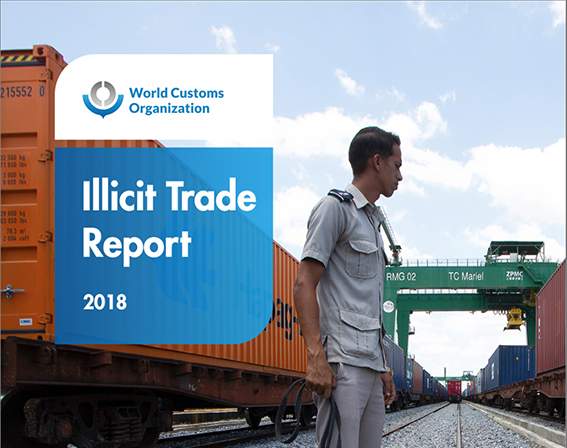
2018 Illicit Trade Report lists Cultural Property as just 0.08% of global illicit trade compared to other risk sectors
The World Customs Organisation’s latest Illicit Trade Report covers 2018, shows a decline in Cultural Property crime, while also demonstrating how it is dwarfed by other sectors of trafficking, such as drugs, weapons and counterfeit goods, accounting for just 0.08% of all reported cases and seizures.
Cultural Property crime includes at least 12 categories of Cultural Property, ranging from household goods to jewellery, books and manuscripts and even flora and fauna. Antiquities form a small part of this category and the WCO does not even record separate figures for them, but does do so for archaeological items.
In summary, the number of reported cases globally in 2018 was 98, down from 155 in 2017. Reported seizures globally fell from 193 to 123, while items seized fell from 15,865 to 15,689. Although currency items seized rose from 9,431 to 13,391, archaeological items seized fell by more than half from 703 to 314.
Spread of cases and seizures
In all, Cultural Property accounted for 0.08% of all cases and seizures across all categories of trafficking. By contrast, Drugs accounted for 39% of case and 32% of seizures, with other categories accounting for shares as follows: Counterfeit Goods (29%/39%); Alcohol & Tobacco (22.5%/20%); Medical Products (4.3%/3.7%); Weapons and Ammunition (2.4%/3.6%) and Environmental Products (2.1%/1.8%).
Published in December 2019, the report records cases and seizures reported through the Customs Enforcement Network (CEN) in in its statistical analysis, although it also includes case studies of other crimes. However, some of these are years old – one dates to 2002, for example.
Analysis of the report by the International Association of Dealers in Ancient Art (IADAA) includes graphics to show the vast difference in sector risks.
With detailed WCO figures for several years running now available, it is clear just how inaccurate claims are of a multi-billion dollar international trafficking network in antiquities, despite such claims driving forward policy and restrictive new laws such as the new EU import licensing regulations.
by Antiquities Dealers' Association | Jun 7, 2019 | Views |
Having spent decades as a journalist and much of the past five years and more investigating fake news in relation to the international art market, I have made some fairly shocking discoveries.
Fake news is created in a number of ways:
• The deliberate dissemination of propaganda
• Marketing posing as news
• The accurate reporting of the above two without fact checking
• The inaccurate reporting of facts – journalistic error
As the internet has made reporters of us all, it is hardly surprising that untrained ‘news’ outlets unintentionally add to the fake news trail. Diminishing resources to fund proper journalism is another problem. Well-paid print journalists once had adequate resources to check facts and conduct in-depth investigations, funded by display advertising and – especially with local newspapers – a core income arising from classified, property, recruitment and motor ads. Those revenue streams have largely now gone online to specialist sites that do not fund the media, so journalism has suffered.
However, it is not just the public and the dying art of journalism that leads to fake news. The really shocking discovery is that, either by design, incompetence or complacency, other sources can include some of our most trusted and respected institutions, from parliament and international law enforcement to NGOs and academia.
My latest article, written for Cahn’s Quarterly and just published, lifts the lid on what has happened in one of the most sensitive corners of the art market, the international antiquities trade, and how fake news has even contributed to the formulation of new laws within the European Union.
You can read it here. see pages 4-6.
Ivan Macquisten
by Antiquities Dealers' Association | Jun 7, 2019 | Uncategorized, Views |
Now the European Union has adopted new import licensing regulations for cultural property, what will it mean for the art market?
First, it is important to understand why this measure has come in. Initially, what drove the European Commission import licensing proposals was the belief that ISIS-looted artefacts from conflict zones were making their way onto the European market to fund terrorism and this had to be stopped. The Commission ordered two studies to look into just how bad the problem was. The second has yet to report back, but the initial study by Deloitte, consulting all 28 EU Members States, found no evidence at all of this happening. Despite this, the Commission, Council of Ministers and European Parliament decided to legislate anyway, putting forward new arguments that the proposals would harmonise regulation across the EU and act as preventative measures for the future.
This change in direction is extremely important because it alters not just the premise for adopting the legislation but also the balance of interests between public security and the international art market. As the EU consistently promised, any adopted measures should be proportionate and not unduly damage the legitimate market. It may be reasonable to argue that the art market must accept the burden of highly restrictive legislation in order to stop an existing crimewave of terrorism funding, but, equally, measures to mitigate the risk of something that mightor might nothappen in the future – a lower risk level, in other words – should acknowledge that the balance of interests must fall closer to those of the market.
In scrutinising this process over a long period of time, the International Association of Dealers in Ancient Art (IADAA) together with CINOA argues that while the premise for the measures may have changed, the balance of the proposals has not moved with it and we have been left with regulation that is disproportionate and will, indeed, unduly damage the market. This regulation, that will have power of law in all EU Member states immediately, (overruling local laws), has been rushed through parliament in an unprecedented way in just one reading. The result is an unworkable, costly and flawed regulation that is at odds with international law.
So what will happen?
In brief, once the European Commission has introduced a fully operational, new-built electronic system for administering and recording imports in accordance with the regulation (expected by 2025 at the latest), cultural property encompassing art, antiques, antiquities and other artefacts entering the EU will be subject to a two-tier “licensing” process.
Essentially, items deemed at high risk of having been looted and “funding terrorism”– antiquities and pieces of monuments aged over 250 years and originating outside the EU regardless of value – will have to pass a test to prove that they have been exported legally. While applying for an “import licence”, importers will have to provide paperwork showing legal export from the source country under the laws of that country at the time of export. It should be remembered that this does not just apply to artefacts from ISIS-plagued states like Iraq, Syria and Libya, but also to Asian art, Islamic art and Tribal art of all types, from the Oceanic art of the Pacific to the native tribal art of North and South America, as well as Australia.
For the hundreds of thousands of objects that have been legitimately on the market for decades or even centuries, providing such proof will be impossible because of how far back in time the original export might have taken place, the difficulty in identifying when that was, the likelihood that no information exists on what relevant laws applied at the time and the almost certain lack of paperwork.
Where this is the case and either a valid export licence from the source country or other paperwork establishing legal export are not present, the regulations allow for a derogation in two very limited exceptional circumstances as long as it can be shown that an item was legally exported from the last country where it had been located for an unbroken period of more than five years. The first is where the source country cannot be reliably identified, while the second is where it can be shown that the item in question was exported from its source country before April 24, 1972, the first enforcement date of the UNESCO Convention.
The latter condition ignores the fact that the accession dates of respective countries to the Convention were all years, if not decades, later, and so introduces more restrictive measures than the source countries themselves have ever agreed to. It is likely that most of these countries are not aware of this EU decision. This alone calls the notion of balance into question.
How legal objects could be made unfairly illegal
What this also appears to mean, in effect, is that anything legally exported from source countries after April 24, 1972 would not be recognised as licit for the purposes of import to the EU unless actually accompanied by a valid export licence. Take, for example, Egypt, which continued to export artefacts legally until 1983. Under the new regulations, an item legally exported from Egypt in 1978 accompanied by reasonable paperwork showing this, but not an actual export licence, might still be deemed illicit for the purposes of import to the EU because it was later than April 24, 1972.
Paragraph 7 of the new regulations makes it clear that the definition of cultural property adopted is based on the 1970 UNESCO Convention and the 1995 UNIDROIT Convention. However, while the UNESCO Convention restricts itself to items “…specifically designated by each State as being of importance”, the terms of the new EU regulations are far wider; “Art 2: ‘cultural goods’ means any itemwhich is of importance for archaeology, prehistory, history, literature, art or science as listed in the Annex”.
This will render the import of many licit items uneconomic, while the extensive customs processing period of several months will also prove a problem for dealers standing at fairs or both dealers and auctioneers selling on to clients.
For everything else – items deemed less of a risk – from paintings and drawings to sculpture, historical items, flora and fauna and so on, importers will need to provide importer statements warranting legal export from the source country, backed by the relevant documentation, if the item in question originated outside the EU, is more than 200 years old and valued at more than €18,000. Again, this is likely to have implications for dealers, auctioneers and collectors for the reasons given above.
The sting in the tail for importer statements
Importer statements may seem like a softer option, but the risk in using them could actually be greater. This is because the declarer takes on legal responsibility for the statement they issue and the status of the item being imported. This means that where an importer acts in good faith, providing the relevant paperwork to support the statement, they could still be held liable under the new regulations if it is later discovered that the item had been stolen or illegally exported at an earlier time, before it came into their possession. The authorities have made it clear that sanctions for those who breach the new regulations will be severe. Retrospective liability of this kind is the curse of the modern legislative process across the board these days.
What makes this all so unnecessary is that effective restrictions already apply within the EU when it comes to Syria and Iraq*; it would have been much simpler and cost-effective to extend them to cover Libya, Yemen and any other source countries identified as being at risk, and this would have easily fulfilled the EU’s self-expressed commitment to proportionality when it comes to the legitimate market.
Even after taking all of the above into account, it is not clear how the licensing process will adequately comply with potentially conflicting legislation addressing consumer privacy and data protection, although counter-terrorism measures tend to outweigh other considerations. Still, importers will be understandably nervous of vague reassurances on this front, so whatever the rules, they will have to be absolutely clear.
What is clear is that the paperwork involved is unlikely to be easy or brief. Talk of adopting Object ID – the international standard for identifying items – and adding “appropriate supportive documents and evidence”, including (but not exclusive to) export certificates or licences, ownership titles, invoices, sales contracts, insurance documents and transport documents, is just the beginning, as the final amendment for Recital 10 of the rules explains. Recital 11 refers to a “standardised document”, recommended by UNESCO but does not explain how long or detailed this might be. Experience tells me that it is unlikely to be short and clear.
Assuming the system eventually works, one advantage is that a standardised record will be shared electronically between all EU Member States, which may be of help to
the market when it comes to moving registered goods again in the future (export licensing).
None of the above begins to explore the additional burden on both the art trade and customs and what that might mean in terms of extra cost, starting with a new and complex electronic system for all Member States.
Taking all of this into account, IADAA intends to continue working with stakeholders – including undertaking a legal review of the adopted terms – to ensure that the measures are adapted to a more workable formula prior to enforcement.
Vincent Geerling
Chairman
IADAA
*Regulations (EC) No 1210/2003 and (EU) No 36/2012
by Antiquities Dealers' Association | Apr 27, 2019 | Uncategorized |
The European Union passed its proposals for the import licensing of cultural property on April 9, confirming the decision in its official statement and publication of the new regulations on April 17. What was eventually passed remains highly controversial and will undoubtedly cause problems. This is because despite more workable and reasonable measures being agreed on as recently as February following consultation with Member States and their legal advisers, the adopted version appears to have ignored their wishes and reverted to an earlier set of proposals instead.
What are the salient points of what has been adopted?
Importers of any archaeological artefacts aged over 250 years originating from outside of the EU will have to provide paperwork showing legal export from the source country under the laws of that country at the time of export regardless of the items’ value. It should be remembered that this does not just apply to artefacts from the Levant or North Africa, but also to Asian art, Islamic art and Tribal art of all types, from the Oceanic art of the Pacific to the native tribal art of North and South America, as well as Australia.
In many (if not most) cases it is likely to prove impossible to provide such proof because of how far back in time the original export might have taken place, the difficulty in identifying when that was, the likelihood that no information exists on what relevant laws applied at the time and the almost certain lack of paperwork. Where this is the case and either a valid export licence from the source country or other paperwork establishing legal export are not present, the regulations allow for a derogation in two very limited exceptional circumstances as long as it can be shown that an item was legally exported from the last country where it had been located for an unbroken period of more than five years. The first is where the source country cannot be reliably identified, while the second is where it can be shown that the item in question was exported from its source country before April 24, 1972, the original enforcement date of the UNESCO Convention. This latter condition ignores the fact that the accession dates of respective countries to the Convention were all years, if not decades, later, and so introduces more restrictive measures than the source countries themselves have ever agreed to. It is likely that most of these countries are not aware of this EU decision.
What this appears to mean, in effect, is that anything legally exported from source countries after April 24, 1972 would not be recognised as licit for the purposes of import to the EU unless it is actually accompanied by a valid export licence.
Take, for example, Egypt, which continued to export artefacts legally until 1983. Under the new regulations, an item legally exported from Egypt in 1978 accompanied by reasonable paperwork showing this, but not an actual export licence, might still be deemed illicit for the purposes of import to the EU because it was later than April 24, 1972.
Sting in the tail of importer statements
Paragraph 7 of the new regulations make it clear that the definition of cultural property they adopt are based on the 1970 UNESCO Convention and the 1995 UNIDROIT Convention. However, while the UNESCO Convention only addresses items of importance, the terms of the new EU regulations are far wider ranging, encompassing all archaeological artefacts regardless of value. This will render the import of many licit items uneconomic, while the extensive customs processing period of several months will also prove a problem for dealers standing at fairs or both dealers and auctioneers selling on to clients.
For everything else, from paintings and drawings to sculpture, historical items, flora and fauna and so on, importers will need to provide importer statements warranting legal export from the source country – backed by the relevant documentation – if the item in question originated outside the EU, is more than 200 years old and valued at more than €18,000. Again, this is likely to have implications for dealers, auctioneers and collectors for the reasons given above.
Importer statements may seem like a softer option, but the risk in using them could actually be greater. This is because the declarer takes on legal responsibility for the statement they issue and the status of the item being imported. This means that where an importer acts in good faith, providing the relevant paperwork to support the statement, they could still be held liable under the new regulations if it is later discovered that the item had been stolen or illegally exported at an earlier time, before it came into their possession. The authorities have made it clear that sanctions for those who breach the new regulations will be severe.
The stated purpose of these regulations is to prevent items that might have funded terrorism from entering the EU. Given that no member state, nor the European Commission’s own research for the purpose of drawing up these regulations has found any evidence at all of this happening, the measures fail to meet the EU’s own standards of proportionality when taking the possible ensuing damage to the international art market into account. Bearing in mind that existing stringent sanctions relating to Syria and Iraq already apply within the EU for this purpose, it would have been much simpler and cost-effective to extend them to cover Libya, Yemen and any other source country identified as being at risk.
Our fellow association, the International Association of Dealers in Ancient Art (IADAA), intends to continue working with stakeholders – including undertaking a legal review of the adopted terms – to ensure that the measures are adapted to a more workable formula prior to enforcement, which cannot take place until the European Commission has introduced a fully operational electronic system to manage the process, and this is not expected to happen for another five or six years. It will be at least two years before the EU confirms whether funding for the electronic system will even be in place. The money will only be forthcoming if it is deemed a priority in the EU’s 2021-27 budget.
Recent Comments