by ADA | Jan 30, 2024 | Views |
Decades-old inaccurate figures used to promote tighter anti-money laundering policy
Of more immediate interest is an older UNODC report, Estimating Illicit Financial Flows Resulting from Drug Trafficking and Other Transnational Organized Crimes, from 2011. It is relevant now because in February 2023, the Financial Action Task Force report: Money Laundering and Terrorist Financing in the Art and Antiquities Market quoted it to support its analysis that money laundering risk was high. Now the European Union is using the FATF report to develop further AML policy.
On page 36 of the UNODC’s 2011 report, it gave a value range of $3.4 billion to $6.3 billion as the Global Financial Integrity (GFI) estimates of the global proceeds of crime for art and cultural property, based on information from Interpol and the International Scientific and Professional Advisory Council (ISPAC) of the UN Crime Prevention and Criminal Justice Programme.
The UNODC report stated that its Interpol and UN-related figures came from the February 2011 Global Financial Integrity (GFI) report, Transnational crime in the Developing World, and World Bank indicators (for current GDP).
Page 47 of the GFI report included a section headed Estimated Value of the Illicit Trade of Cultural Property, which began: “The actual value of the global illicit trade in cultural property is unknown and most experts are hesitant to estimate a value.”
Despite this, the UNODC provided an estimate range of $3.4-6.3 billion for the proceeds of transnational crime involving art and cultural property, citing the GFI report “based on Interpol, International Scientific and Professional Advisory Council of the United Nations Crime Prevention and Criminal Justice Programme”.
The remainder of that opening paragraph from the GFI report explained where this range of figures came from: “Estimates that do exist range in size from $300 million to $6 billion per year, with Interpol estimating $4 to $5 billion,and the International Scientific and Professional Advisory Council of the United Nations Crime Prevention and Criminal Justice Programme (ISPAC) estimating $6 to $8 billion. This report creates a range by taking the average of the low estimates and the average of the high estimates reported above. The result is an annual value of $3.4 to $6.3 billion.”
Checking the sources of these sources we come up with the following:
– $300 million to $6 billion: Not stipulated, but almost certainly from the UK House of Commons, Culture, Media and Sport Select Committee, Cultural Property: Return and Illicit Trade, seventh report, vols. 1, 2 and 3 (London, 2000) (see Part 1 of this article), where they were quoted anecdotally by a Scotland Yard office whose colleague then provided evidence to refute them.
– $4 billion to $5 billion: Currently unavailable
– $6 billion to $8 billion: the International Scientific and Professional Advisory Council of the United Nations Crime Prevention and Criminal Justice Programme. ISPAC (2009). Organized crime in Art and Antiquities. Selected Papers from the international conference held at Courtmayeur, Italy 12-14th December 2008. Milan: ISPAC.
UNODC Deputy Director John Sandage wrote the foreword to the published ISPAC paper from that 2008/9 programme. Its second paragraph read: “The value of international trade in looted, stolen or smuggled art is estimated at between US$4.5 billion to US$6 billion per year.”
Page 30 of the same report cited a figure of $7.8 billion from The 1999 United Nations Global Report, but it was wrong. In fact, the 1999 UN report quoted the range of $4.5 billion to $6 billion (see page 229), attributing it to a New York Times article of November 20, 1995, by Alan Riding titled Art theft is booming, bringing an effort to respond. Riding proved to be a dead end, giving no source beyond “experts”.
Meanwhile, Page 31 of the ISPAC report quoted a figure of £3 billion for London in the early 1990s according to Scotland Yard, and FBI figures of $5 billion and $6 billion for the whole art theft market for 2008.
In total then, the estimated $6 billion to $8 billion figures quoted by the UNODC in 2011 appear to come from a mix of sources, including the FBI and a non-existent rounded up figure from the 1999 United Nations Global Report. The FBI did not give a source for its figures, while the 1999 UN report gave a different range of figures, sourced from a 1995 New York Times article whose only source is unnamed experts.
As they refer to the “art theft market”, they clearly include all associated crime, such as commercial and domestic burglaries, with associated insurance losses – as can be seen from the evidence provided by Scotland Yard to the House of Commons in 2000 – and the ISPAC report confirmed that Interpol attributed the highest levels of cultural property theft to Italy and France.
Now move forward to 2023 and the Financial Action Task Force report, entitled Money Laundering and Terrorist Financing in the Art and Antiquities Market, and the $6.3 billion figure arises once again in paragraph 3 of the Introduction on page 5. The FATF burnishes that figure by stating that it is a UNODC estimate, whose own source (the 2011 report) shows that this is not true. In reality, it is a figure quoted by the UNODC from other uncertain and inaccurate sources, as shown above.
So, a report by the FATF published in February 2023, aimed at influencing current international policy – and now being used by the EU to tighten its anti-money laundering regulations further – quotes a 12-year-old set of figures based on guestimates and unattributed sources dating from the early 1990s to 2008. And it uses this as the key statistic relating to current global art crime to make its point.
As can be seen by the tortuous byways of out-of-date reports and newspaper articles dating back almost 35 years and quoting myriad figures that have contributed to this misleading picture, the truth can be lost very quickly. Nonetheless, the authority of the UNODC means these statistics are quoted as key evidence.
And this is just one example of how this is happening.
See Part 1
by ADA | Oct 27, 2023 | Uncategorized, Views
Three developments in recent weeks have raised questions once again about the activities of the Manhattan District Attorney’s office and its antiquities unit. Separately they are of concern; together they demand some clear answers.
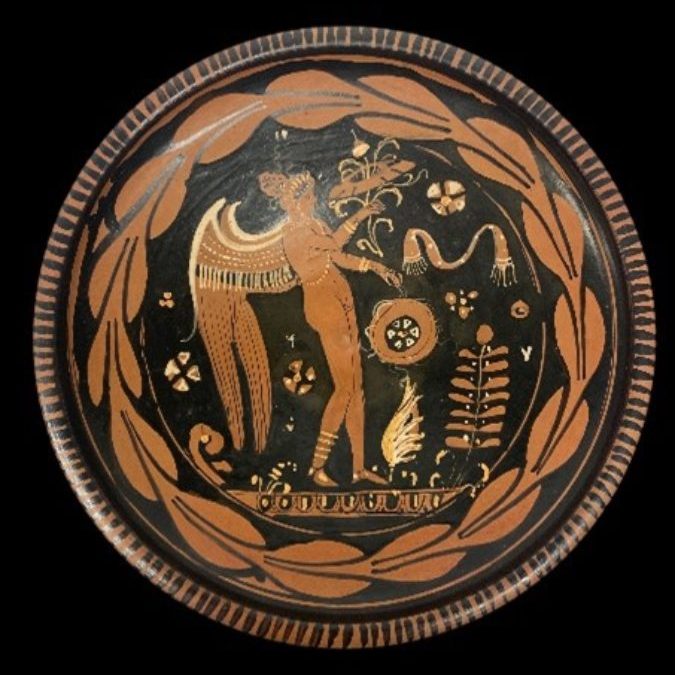
The first involves the claim that 19 items returned to Italy as “illicit” were worth $19 million. The figures simply didn’t add up according to expert valuers from the Antiquities Dealers’ Association, who noted that the South Italian plate included was worth up to about $7,000 at auction, but “only if it were to have a good provenance”.
When asked by Antiques Trade Gazette how the unit had arrived at the valuation, the D.A.’s office replied: “We have experts assess the objects at the time of each repatriation based on the legal definition of value under the law.”
Who these experts are and how they arrived at such an overblown valuation remains a mystery.
This matters because:
- What appears to be a gross exaggeration of value feeds into the inaccurate narrative of a huge international illicit trade in artefacts.
- It also boosts the public standing of the antiquities unit, which in turn makes its unquestioned position all the more unassailable at a time when serious questions regarding its activities need to be asked.
- The unit’s activities are funded from the public purse, so the public is entitled to accurate reporting and transparency.
If the above is an accurate assessment of the situation, it raises a raft of new questions.
One of those questions involves the second development: the D.A.’s publishing of a media release that led to inaccurate reporting on the criminal status of individuals.
Having unequivocally labelled a number of named individuals as “major antiquities traffickers” in the opening paragraph, an unheralded footnote states: “The charges referenced within are merely allegations, and the individuals are presumed innocent unless and until proven guilty.”
The failure to annotate the body of the release with a reference to the footnote inevitably risks misreporting, especially by those who fail to read to the end of the release. An internet search has revealed at least two examples of this happening in this case. Why is this not of serious concern to the Manhattan D.A.?
Cleveland Museum of Arts sues the D.A. over statue seizure
One of the most significant developments has come at the hands of the Cleveland Museum of Arts, which is now suing the D.A.’s office over its seizure of a headless ancient bronze statue valued at $20 million.
The D.A.’s office argues that it is of Marcus Aurelius and was looted from Turkey. The museum, which acquired the statue in 1986, says that is not the case.
As the court papers reveal, Turkey made vague and unsubstantiated claims regarding the statue around 15 years ago but did not respond when asked for evidence to support its case and did not pursue the matter further until now.
As the statue had been widely exhibited and written about over the years, Turkey had had a long time to press its case but did not do so. This was also the case when Turkey failed in its claim over the Guennol Stargazer in the New York courts. Among other comments in 2021, U.S. District Judge Alison Nathan noted that Turkey had known of the piece for years and had had ample opportunity to make a claim but had failed to do so in a timely manner.
The Cleveland Museum of Art’s court papers highlight the controversial approach of the Manhattan District Attorney’s office in seizing objects and returning them to source countries: “For more than ten years, the New York County (Manhattan) District Attorney has conducted numerous investigations of antiquities allegedly stolen from foreign nations, returning many of them to those nations. Proof that these items are “stolen” typically is established using the laws of such nations (“patrimony laws”), which, among other things, declare that items of a certain age or type belong to the nation. If a covered object is then illegally exported after the effective date of the patrimony law, the argument is made that it is stolen property.
“Unlike typical criminal investigations, the New York District Attorney’s primary purpose appears to be to return antiquities to their countries of origin or modern discovery, assuming the office can verify the appropriate country.”
The court papers also note that when such returns are made, the media report the returns as involving “looted antiquities” – evidence of any such looting, if it exists, is rarely made clear.
As ADA chairman Joanna van der Lande wrote to ATG in the wake of the $19 million claim: “It’s time that the media challenged official bodies, from the Manhattan D.A.’s office to UNESCO, the European Commission, Europol and others, and subject them to the same level of scrutiny that they apply to the market rather than just accepting what they put out in statements. Let’s have the same transparency and due diligence when it comes to ‘facts’ that these bodies so readily demand of dealers and auction houses in relation to objects.”
by ADA | Sep 20, 2023 | Views
How do those buying antiquities protect themselves and the public?
Anyone buying items online needs to ensure that what they are paying for is genuine and that the seller has the right to sell them. That’s true for ordinary household goods and consumer wares, and especially true when it comes to the trade in antiquities.
The two trade associations supporting the Antiquities Forum, the UK-based Antiquities Dealers’ Association (ADA) and the International Association of Dealers in Ancient Art (IADAA), have long pioneered policy on this. Having a clear and effective crime-prevention policy is the best way of safeguarding their members and their members’ reputation, as well as boosting confidence in the trade among the public. It is also essential for preventing ancient artefacts being exploited by the unscrupulous.
In doing this, the two essential considerations are Provenance and Due Diligence. But what do they mean?
Provenance is the history of an object, tracing its ownership back as far as possible to ensure that it remains an item that can legitimately be traded. The ADA sets out a detailed summary of the different types of provenance an object can have, what that means and why it is important, on this website.
Due diligence, meanwhile, is the process which trade professionals undertake to ensure that the items they are handling are authentic and can be traded legitimately. It is important to remember that in the event of any legal dispute, the effectiveness of the due diligence undertaken by those responsible will be taken into account.
Effective due diligence is a vital part of protecting traders’ good reputations, which are essential for success in business.
What the associations have to say
The ADA sets out the process of due diligence for its members as follows:
Before offering property for sale, members must be satisfied that they have conducted the level of due diligence required to establish that the property they are handling is authentic and that there are no known legal obstacles to selling and passing title.
The ADA requires members to adhere to the relevant domestic and international laws that govern the markets for archaeological and ancient property and, in many respects, ADA standards go beyond the legal requirements.
If members are not certain as to the laws of a particular jurisdiction, or their application to a specific item, please consult the ADA Council for advice.
Members must act in good faith throughout all transactions.
Members should record each transaction with diligence and keep records for a minimum of 6 years.
Where a member is buying from another dealer or an auction house then the member should record the transaction and note the provenance as provided. Some items will have more detailed provenance than others.
Where a member is buying from a person other than a dealer or an auction house then the member should establish the identity of the vendor. Unless the vendor is well known to the dealer, where an item is worth over £3,000 then member should request photographic identification and if practical take and retain a copy of it. Members should obtain in writing:
- The name and address of the vendor;
- A warranty that the vendor has good title to the objects;
- Confirmation of where, when and how the vendor obtained the objects, as can be provided by the vendor;
- Where the vendor acquired the objects outside the United Kingdom, confirmation that the item has been exported or imported in conformity with local laws and where available evidence of that.
In addition, wherever possible members should arrange payment by a method that leaves an audit.
Lawful Trading
Members undertake to carry out due diligence, as set out under this Code, to ensure, as far as they are able, that objects in which they trade were not stolen from excavations, architectural monuments, public institutions or private property and are lawfully on the market for sale.
Members will make all reasonable enquiries to ascertain earlier ownership history of any object they are considering purchasing, mindful that the illicit removal of archaeological objects from their original context is damaging to our knowledge and understanding of the past.
Members have a duty to record and preserve relevant prior ownership history of an object along with any evidence supplied.
Stolen Art Databases
“It is a condition of membership that all goods acquired at the purchase price of £3,000 or more be checked with an appropriate stolen art database, unless they have already been so checked.’
No system is perfect and many items have very little documented information establishing a detailed history going back decades or longer. This does not necessarily mean that there is anything wrong as there can be a number of valid reasons for this: for instance, paperwork may have been lost or not kept – in the past, such information was not deemed important, as it is today.
As can be seen from the due diligence requirements set out above, however, a higher level of checking is demanded for higher value items.
Market professionals also tend to have effective antennae for picking up ‘red flags’. Remember, just like anyone else, they do not want to hand over ready money for something that may later turn out to be a problem.
Additional things they look out for include items that are significantly under-priced, as this may point to someone handling stolen goods trying to offload them. Another thing to check is how credible the seller is as a source of the material being offered.
The ADA and IADAA have both been proactive in developing due diligence over the years. Indeed, UNESCO’s code of conduct in this field was based on the earlier code published by IADAA.
Both the ADA and IADAA provide further advice on their websites at www.theada.co.uk and www.iadaa.org
by ADA | Jul 17, 2023 | News, Uncategorized
Ministry’s legal head reinforces ‘innocent until proven guilty’ principle in interpreting law
The Italian Ministry of Culture has issued a potentially ground-breaking statement, following a court ruling. It challenges current thinking on cultural heritage and patrimony and reinforces private property rights.
Essentially the statement addresses conflicting priorities between private property rights and the Italian state’s desire to protect its cultural heritage, and how this conflict addresses proof of ownership.
Recent years have seen a significant shift in attitudes among state authorities and law enforcement towards the idea of reversing the burden of proof regarding the legitimate ownership of antiquities and ancient coins. This is despite private property rights being enshrined in all fundamental clauses of international human rights conventions and in both common law and natural justice. Guilty until proved innocent has almost become the new normal.
Now, however, comes evidence of a fight back against this fundamentally undemocratic idea. This statement is one of them, and it has an additional welcome twist.
It arose after Italy’s Directorate-General of the Department of Archaeology, Fine Art and Landscape sought advice from the legal department on how to interpret Article 72 of the Cultural Property Act. As Coins Weekly notes: “This article governs the import of archaeological (numismatic) objects originally from Italy and demands extensive proof of origin.”
The legal department’s head, renowned professor of law Antonio Tarasco, came back with a surprising statement, acknowledging competing views. On the one hand, some lawyers argue that protecting Italian cultural heritage is a priority that renders significant objects as state property unless private ownership can be proved (reversal of the burden of proof); on the other are lawyers who argue that private ownership should take priority except in the most exceptional circumstances.
Law professor acknowledges Court of Cassation ruling as precedent
This dichotomy led the professor to look at the part documentation has played over the years in establishing ownership rights for coins in Italy. The first thing he noted was that as late as the 1980s, retaining proof of purchase was highly unusual. But he also noted that in 2009, his department insisted that “proper documentation issued by the countries of origin” was essential in establishing the lawful circulation of objects.
Importantly, this meant that any certification issued on import had to be renewed at the appropriate time or the Italian State might take possession of the item in question.
Fast forward to 2021, however, and Italy’s Court of Cassation – the highest appeal court which focuses only on how laws are interpreted – re-established the priority of private ownership without automatically having to provide supporting documentation (innocent until proven guilty).
Professor Tarasco points out that this meets the test of proportionality and reasonableness (just as the ADA has been arguing needs to happen with the EU import licensing regulation 2019/880). Of particular note is what Professor Tarasco has to say about this: “Forcing citizens (be they collectors or professional numismatists who buy abroad) to provide (almost fiendishly extensive) proof of the legitimate origin of the coins they buy, which must even date back to before 1909 [when Italy’s patrimony law was passed], is ultimately making it more difficult to buy – and therefore import into Italy – significant numismatic material that may one day enter public collections.”
The welcome twist Professor Tarasco adds at the end of his statement argues that making imports more difficult is actually damaging to Italian cultural heritage: “If we look closely, we can see that this approach – even if applied with good intentions – will not result in Italy protecting its national cultural property, but rather losing it.”
A fascinating statement from the head of the legal department of Italy’s Ministry of Culture, then. With all this in mind, how does Professor Tarasco view Italy’s application of Article 4 of the EU regulation 2019/880 from June 2025? It insists on the sort of “fiendishly extensive” documentation and evidence that effectively reverses the burden of proof in the way he decries here. And how does he feel about the Memorandum of Understanding Italy shares with the United States, which does exactly the same?
Professor Tarasco has highlighted the importance of proportionality and reasonableness here – qualities echoed in the European Commission President’s guiding principles for policy. If the Italian government’s leading legal authority on the issue, together with its highest court, acknowledges that private property rights have priority over what may be seen as the national interest in this way, how can it continue to move forward with either the new EU law or its MoU?
by ADA | Jun 19, 2023 | News |
When the new import licensing regulation for cultural goods (2019/880) comes into force in the EU on June 28, 2025, what goods will be affected from the world of art and antiques?
According to the law, relevant items – all of which must have originated from outside the EU – will be split into two types: those that need a full import licence, and those that can be brought in on the basis of an importer statement.
What those items are is set out in a series of three tables in the Annex to the legislation, Parts A, B and C.
Any attempt to import an item covered by Part A will be prohibited if it is deemed to have been exported illegally from its country of origin, whenever that was.
Items included under Part B are more than 250 years old and seen as being at greater risk of looting and trafficking than those covered by Part C, and so are subject to tighter rules – in other words these are the pieces that need an import licence rather than an importer statement, and no minimum value threshold applies. This means that unless customs tell the importer otherwise, a licence will be required for every individual item, even where they might be identical, low-priced pieces imported together in large groups.
It should be remembered that being issued with an import licence conveys no ownership rights or proof of the item being legitimately acquired.
Applicants for a licence will have to demonstrate that the item in question was exported from the country where it was created or discovered in accordance with the laws and regulations of that country at the time (whenever that was – and it could be centuries ago).
Essential licences and certificates
If that country issued export licences or certificates at the time, the applicant must provide the relevant original licence or certificate (even though there has never been any requirement to keep them once used). Otherwise, they must show that no such laws and regulations existed at the time.
Because many of these items will have left those countries decades or more beforehand, that proof may no longer survive, if it was ever there in the first place. So, the law provides a third way of qualifying for a licence: evidence that the item in question has been exported in accordance with the laws and regulations of the last country where it was located for an unbroken period of more than five years.
There are further conditions to this option. Assuming you can prove that the item has spent an unbroken period of more than five years in a single country, you must also show that it wasn’t there for temporary use, or was just there in transit, for re-export or transhipment. You must also show that it was exported from the country where it was created or discovered before 24 April 1972 – when the 1970 UNESCO Convention on trafficking of cultural goods first came into effect.
One cause for customs rejecting the application will be if it has “reasonable grounds” to believe that the item’s original export from the source country was illicit. But the regulation does not say what “reasonable grounds” means in this context.
Items covered by Part C needing an importer statement are all individually valued at €18,000 or more per item and are more than 200 years old.
Recent Comments