by ADA | Jun 25, 2026 | News |
Antiques Trade Gazette has just published an excellent guide to permissions regarding non-European Union goods returning to the EU with a three-year period.
Following clarification from the European Commission, legal columnist Milton Silverman confirms that these goods do not need an import licence or statement if they have been in free circulation within the EU, are exported from the EU and then return there within a three-year period. Importantly, the item does not have to return to the same person or EU member state from which it was exported.
The article sets out a case study where a Belgian collector who understood the rules came up against a shipper who did not. While the rules may now be clear, ensuring that customs enforcement and others involved along the way are fully conversant with the rules is another matter.
Silverman adds information relating to duty relief and VAT, as well as the rights and process of appeal if customs do not honour the three-year rule.
by ADA | Jun 24, 2026 | Uncategorized |
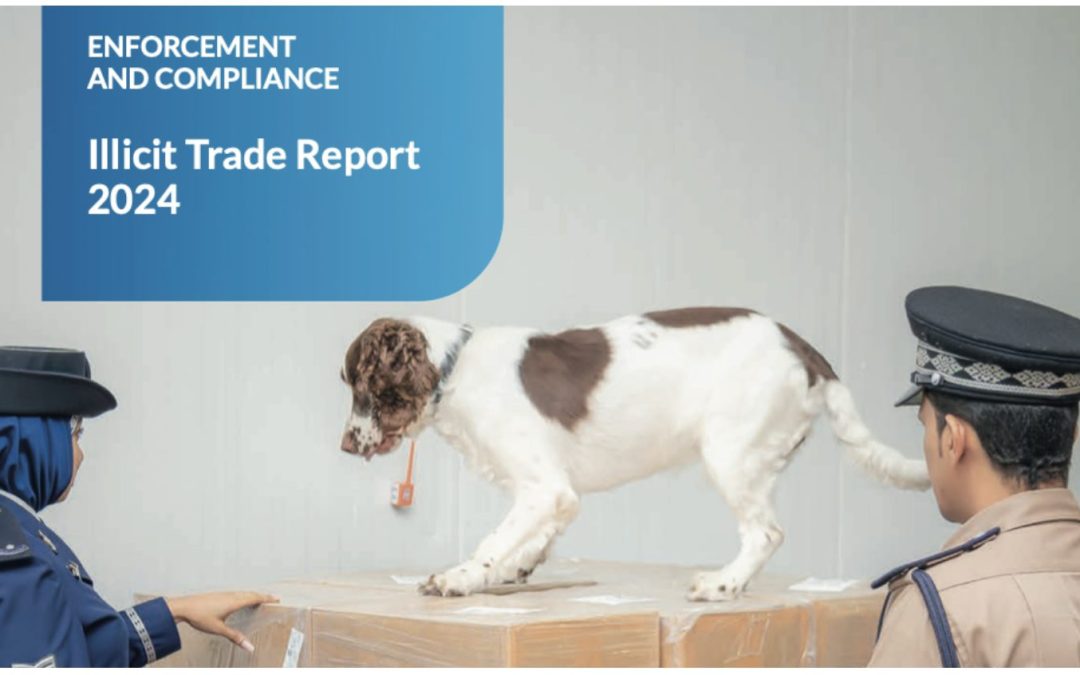
Out now for almost six months, the World Customs Organisation’s latest Illicit Trade Report (ITR) covers the year 2024. The introduction hails the report as offering “a comprehensive analysis of the dynamics and evolving trends of illicit trade. This edition underscores the complexity and adaptability of transnational criminal networks, highlighting impacts on public safety, global security, and sustainable development.”
So what does the highly detailed and analytical 305-page report have to say about cultural property crime?
Very little indeed.
On page 23, a bar chart provides The Number of Responses to the WCO Seizure Statistics. These appear to refer to the number of customs forces who have replied to a WCO survey asking for the number and volume of seizures in their jurisdiction. Responses concerning cultural goods rose from around 29 to 33 year-on-year to 2024.
A bubble chart on the following page appears to show a 75% rise in the number of cases involving cultural goods with a rise in the volume of goods seized somewhere below 5%. However, it also shows that the volume is tiny compared to any other form of illicit activity except for Explosive Precursors – chemicals that can be used in the creation of explosives.
On the following bubble chart showing year on year trends, cultural goods do not appear at all.
Chart 4 on page 26 illustrates priorities by commodity, with Cultural Goods listed as an Essential priority for around four out of 70 Customs administrations – the lowest score for any commodity. Around another eight administrations see it as a High priority, again the lowest score, and by some distance compared to most other commodities. These ratings remain almost unchanged from 2023, as the next bar chart shows us on page 27.
The attraction of fungible items
A key consideration making commodities attractive for money laundering is their fungibility, according to the introduction to the chapter on ML on page 37: “…the majority of these cases involve the illicit movement of bulk cash, but also include significant quantities of gold, rhodium, silver, and precious stones, including diamonds. These materials, due to their high value-to-weight ratio, fungibility, and ease of transport, remain attractive to criminal networks seeking to transfer or launder proceeds across borders while evading detection.”
As readers will know, a distinctive feature about artworks and antiquities is that they are not fungible.
Much of the Money Laundering and Counter Terrorism Financing chapter is dedicated to currency and gold smuggling – by far the biggest problem it identifies when it comes to ML, with an additional issue involving agricultural equipment in Brazil.
Saudi Arabia, Bangladesh and India reported the most cases, with Japan, Turkey and Sri Lanka next. All countries on the list are in the Middle East, Far East, Balkans and eastern Mediterranean. On page 68, the report concludes re ML: “The consistent involvement of departure points like UAE, Saudi Arabia, and Hong Kong-China, and destination corridors into India, Türkiye, Japan, and Bangladesh, suggests entrenched regional laundering networks that demand multi-jurisdictional enforcement.” Note: ‘regional’.
Jewellery and the high-risk traveller
On page 63, it reports: “Jewellery smuggling via couriers remains a key modality: The high number of pieces seized in Saudi Arabia, Türkiye, and Japan indicates frequent interception of concealed jewellery worn or carried by passengers, underlining the importance of profiling high-risk travellers and body-worn concealment detection.”
Overall, the ITR is extremely detailed, providing numerous graphs, data sets, case studies and photographs of seizures on extensive chapters concerning ML and terrorism financing, drug trafficking, environmental crime, intellectual property rights, health and safety, revenue fraud and smuggling, and security breaches.
Cultural goods had their own chapter – albeit revealing just how small the problem is – for several years until the early 2020s. No more, however.
Considering the level of intelligence in every other sphere of interest across such a wide number of jurisdictions, it is hardly credible that the dearth of data when it comes to cultural goods can be explained entirely by under reporting. At no point in any past WCO report have cultural goods ever shown any significant contribution to illicit trade on a global scale in comparison to other spheres. Now they show even less, despite all the lobbying claims to the contrary.
Customs administrations have consistently ranked it as their lowest priority. Could this be because it is the smallest issue that they face in this context?
Recent Comments