For years now, the art market’s trade associations and campaign groups market have looked on with frustration and horror as the Manhattan District Attorney’s office has set about dismantling much of the New York trade. Collectors, dealers and museums within the city and far beyond have also lost their property and faced the intimidatory tactics of Assistant District Attorney Matthew Bogdanos and the Antiquities Trafficking Unit (ATU) in their crusade to seize cultural objects and hand them back to their countries of origin.
Much of the time, these seizures and handovers have shared a single feature: the lack of proof that the objects in question were illicit. What evidence may have been available to the authorities has seldom been shared with the public who pay for the ATU, even on request.
Instead, the threat of criminal prosecution, together with the knowledge that even if they prove their innocence they must still pay all the substantial costs involved, have persuaded those targeted to yield up their possessions to the authorities, leaving the ATU’s tactics unchallenged.
Beyond the seizures themselves, further concerns have arisen over the fate of artefacts, such as when the DA’s office proudly handed back a series of Tibetan items – not to Tibet but to its occupying oppressor, China.
Now, as the New York Times and expert cultural property lawyers have reported, the ATU’s inquisition may be over – at least for the moment.
Art Institute of Chicago proved the vital catalyst
The catalyst was the Art Institute of Chicago’s (AIC) decision not to cave in to the ATU’s demands but to fight back instead.
It went to appeal over a 2023 court decision to allow the seizure of a drawing by the artist Egon Schiele from its collection as a suspected Nazi-looted artwork.
The seizure was not based on proof of the drawing being illicit, but on claims from the heirs of the original owner coupled with what has been an effective legal loophole that paved the way for more than 100 such seizures by the ATU under Bogdanos.
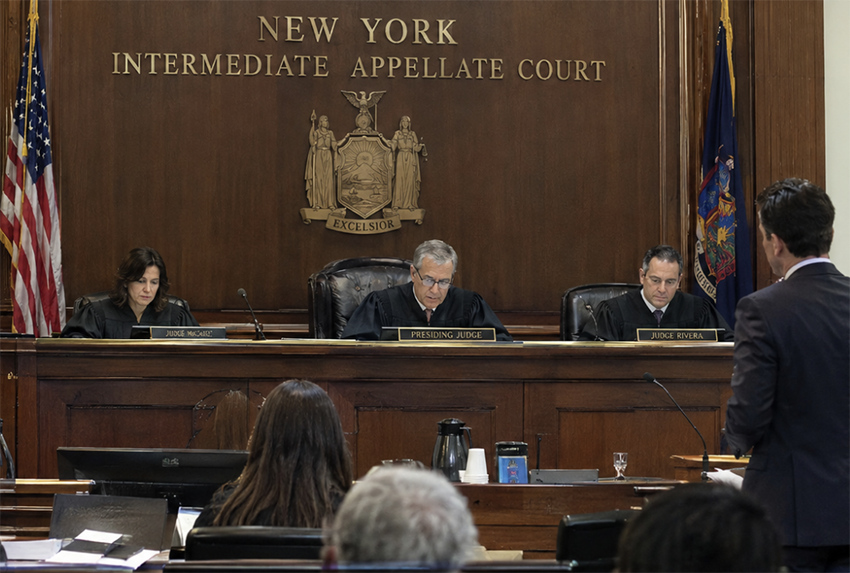
The New York Intermediate Appeal Court gave no view as to whether the drawing was illicit or not but ruled that the ATU’s means of justifying the seizure – the legal loophole – were not valid.
That loophole is New York Criminal Procedure Law § 690.10 and New York Penal Law § 450.10. Law § 690.10 requires reasonable cause to believe the item under question is stolen or otherwise unlawfully possessed to justify seizure, which did not apply in this case, according to the Intermediate Appeal Court. As Cultural property lawyer Nicholas M. O’Donnell, who spoke to the NYT on the matter, explained in his nicksartlaw substack article, “Section 450.10 concerns property seized in connection with a criminal proceeding where ‘satisfactory proof of title’ can be shown”. In this case, such undisputed title could not be shown, and no criminal proceedings were involved.
Ownership rights disputed in the Schiele case
“The ATU and DA have long taken the view that ‘a civil-like proceeding’ may be carried out—with or without a pending criminal case—in order to ‘return’ the paintings to the ‘rightful owners’,” writes O’Donnell. “To do so, the ATU would apply to the criminal court for a turnover order, usually supported by a waiver by the current owner.”
Although the definition of ‘rightful owners’ can be highly subjective, this tactic has worked until now because, as explained above, the ATU’s targets have rolled over when faced with the possible prospect of criminal proceedings, leaving that prospect untested. The AIC effectively called Bogdanos’s bluff, and the Intermediate Appeal Court ruling is the result.
In the case of the Schiele, ownership rights are disputed, and the justification for its seizure and return to the heirs of the original owner is not clear, because it is claimed that title was transferred legally to the owner’s sister-in-law, and the drawing was disposed of later.
As O’Donnell goes on to explain, “The DA is wrong about the scope of Section 450.10. As the Appellate Division notes, ‘Penal Law § 450.10(5) was designed to provide an expedient means for the return of stolen property to the readily identifiable owner of that property; it was not designed to address complicated, disputed issues of ownership. Thus, Penal Law § 450.10 does not provide for adjudication of disputed property rights.’ This eliminates the vast majority of the ATU’s activity.”
O’Donnell also notes that with no associated criminal case (as well as the doubt over dispute over legal ownership) no criminal justification exists for the seizure.
Welcome check on reversing the burden of proof
“As a result, many of the kinds of retrievals the DA has secured in the past where he alleged only absent ‘conspirators’ or gaps in provenance information can no longer be brought.”
From the Antiquities Forum’s (IADAA and the Antiquities Dealers’ Association) perspective, the ruling is particularly important because it acts as welcome check on the spread of the reversal of the burden of proof, an insidious and highly questionable ‘ethical’ trend to assume guilt unless innocence can be proved. This may be convenient for the authorities in cases involving property where provenance is very often incomplete, such as with ancient art, but it has frightening implications for the long term interests of justice and human rights.
The DA’s office is currently keeping its own counsel on what to do next, and the Intermediate Appeal Court ruling may be subject to appeal itself – cultural property lawyer Michael McCullough also posting on Linked In sees this as inevitable.
O’Donnell is clear on the current outcome, calling the ruling “a deserved rebuke in a case that should never have been brought” that “may spell the end of the Manhattan District Attorney’s so-called Antiquities Trafficking Unit as we know it”.
Having said that, ADA Bogdanos is a highly determined individual, and it would be foolish to underestimate his resourcefulness. Nevertheless, this decision has been a sorely needed reassurance that museums, collectors and the trade do have rights under the law, and the courts will back them where justified. As McCullough posted: “The court was particularly concerned that AIC had been deprived of the protections ordinarily available in a civil action.”
Recent Comments